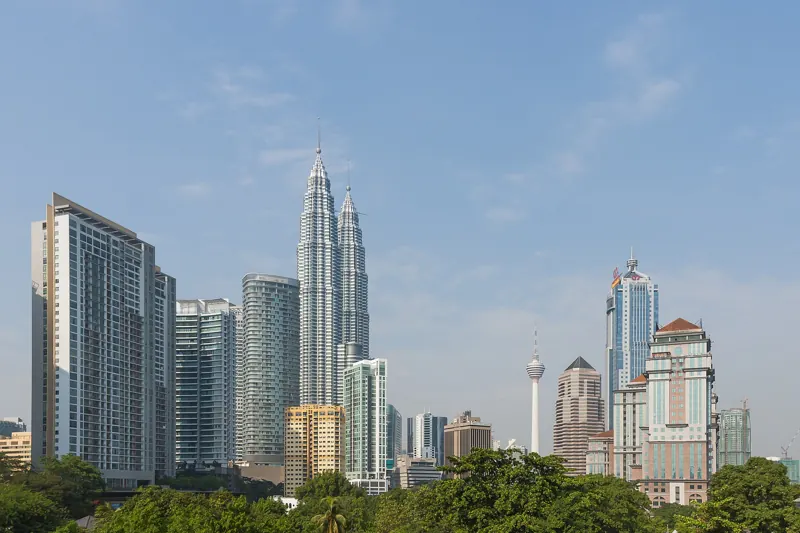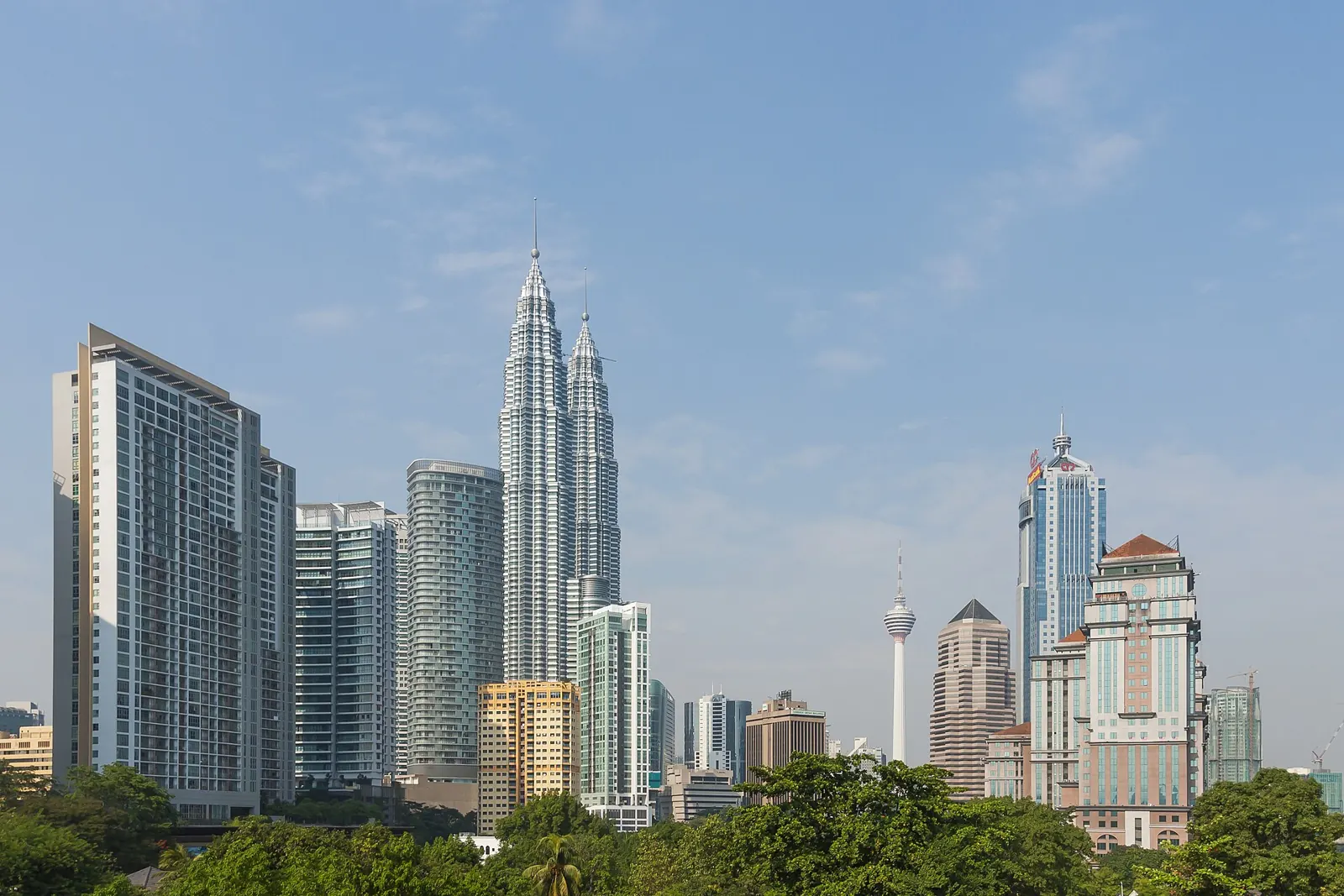
You have saved enough to stop working, and two massive capital cities keep appearing on your shortlist. Kuala Lumpur vs Mexico City for retirement is a choice between Asia’s most English-friendly metropolis and Latin America’s cultural powerhouse.
A comfortable retirement in Kuala Lumpur costs $1,400 to $1,800 per month. Mexico City runs $1,600 to $2,200 per month. Both cities deliver first-world infrastructure at developing-world prices, with modern metro systems, world-class hospitals, and international dining scenes.
This guide compares costs, visas, healthcare, safety, taxes, and quality of life across 13 categories. You will leave with a clear answer for your budget and lifestyle.
Quick Verdict: Kuala Lumpur vs Mexico City at a Glance
Both cities rank among the most underrated retirement destinations for Americans. Your winner depends on language comfort, climate preference, and tax planning priorities.
| Category | Kuala Lumpur | Mexico City | Winner |
|---|---|---|---|
| Monthly budget | $1,400–$1,800 | $1,600–$2,200 | Kuala Lumpur |
| Retirement visa | MM2H (5-year+) | Residente Temporal (4-year) | Mexico City |
| Healthcare quality | Excellent | Excellent | Tie |
| Safety | Good | Moderate | Kuala Lumpur |
| Climate | Hot, humid year-round | Spring-like year-round | Mexico City |
| English spoken | Widely spoken | Limited | Kuala Lumpur |
| Food costs | $3–5 per meal | $3–6 per meal | Kuala Lumpur |
| Internet speed | 300–800 Mbps | 100–300 Mbps | Kuala Lumpur |
| US time zone overlap | 0 hours | 1–2 hours | Mexico City |
| Tax burden | Territorial/remittance | Territorial/remittance | Tie |
Cost of Living: Kuala Lumpur vs Mexico City Monthly Budget
According to Numbeo’s cost of living comparison, Kuala Lumpur costs 15% to 25% less than Mexico City across housing, food, and transportation. A single retiree can live well in KL on $1,600 per month. Mexico City requires closer to $1,800.
Here is what a $2,000 monthly budget looks like in each city:
| Expense | Kuala Lumpur | Mexico City |
|---|---|---|
| Rent (1-bed, furnished) | $400–$650 | $550–$900 |
| Utilities | $40–$70 | $50–$80 |
| Groceries | $200–$300 | $250–$350 |
| Dining out (15 meals) | $60–$100 | $70–$120 |
| Transportation | $30–$60 | $40–$70 |
| Health insurance | $150–$250 | $100–$200 |
| Entertainment | $80–$130 | $100–$150 |
| Phone + Internet | $25–$40 | $30–$50 |
| Total | $985–$1,600 | $1,190–$1,920 |
The Kuala Lumpur advantage is strongest in housing and transportation. A modern condo in KLCC or Mont Kiara rents for $450 to $650 per month. A comparable apartment in Roma Norte or Condesa costs $650 to $900.
KL’s public transit keeps daily costs low. The MRT, LRT, and monorail network covers most of the city for $0.30 to $1.00 per trip. Mexico City’s Metro costs just $0.25 per trip, but you will supplement with Uber for safety at night.
Western groceries are similar in price. Imported cheese, wine, and specialty items cost comparable amounts in both cities. If you eat local, KL wins on variety and price. Roti canai costs $0.50, nasi lemak runs $1.50, and a full hawker meal stays under $3.
Mexico City’s mercados offer incredible value on fresh produce. A weekly fruit and vegetable haul costs $10 to $15. The comida corrida (set lunch) at local restaurants includes soup, main course, drink, and dessert for $3 to $5.
Alcohol costs favor Mexico City. Local Mexican beer costs $1 to $1.50 at a bar. Malaysian alcohol is taxed heavily, with a local beer running $3 to $5 at a restaurant.
Use our geographic arbitrage calculator to model your specific spending against both cities.
Retirement Visas: Malaysia MM2H vs Mexico Residente Temporal
Mexico’s Residente Temporal visa offers a lower financial threshold and simpler application. Malaysia’s MM2H program requires higher deposits but provides a longer-term stay and more stability.
| Requirement | Malaysia MM2H | Mexico Residente Temporal |
|---|---|---|
| Age minimum | 35+ (Silver) / 50+ (Gold) | None |
| Income requirement | RM 40,000/month (~$9,000) or fixed deposit | $2,600/month or $43,000 savings |
| Fixed deposit | RM 1,000,000 (~$225,000) for Silver | Not required |
| Validity | 5 years (Silver), 15 years (Gold) | 1 year, renewable up to 4 years |
| Health insurance | Required | Mexican plan recommended |
| Path to residency | Possible but limited | Permanent residency after 4 years |
| Work permitted | No | With permit |
Malaysia MM2H key requirements:
- Age 35+ for Silver category, 50+ for Gold
- Fixed deposit of RM 1,000,000 (~$225,000) in a Malaysian bank for Silver
- Monthly offshore income of RM 40,000 (~$9,000) required
- Health insurance valid in Malaysia mandatory
- Property purchase allowed above RM 600,000 threshold
The MM2H requirements increased sharply in 2021. The high deposit and income thresholds lock out many early retirees. Read our guide on Malaysia MM2H visa alternatives for workarounds.
Mexico Residente Temporal key requirements:
- No age minimum, open to all nationalities
- Proof of monthly income of approximately $2,600 (130,000 MXN) for the past 6 months, or $43,000 (2.15M MXN) in savings/investments
- Valid for 1 year, renewable up to 4 consecutive years
- Apply at Mexican consulate in your home country, then exchange for card in Mexico
- Path to permanent residency after 4 years
See our Mexico retirement visa guide for step-by-step application details.
Mexico City wins on visa accessibility. Lower thresholds and no age restriction make it reachable for FIRE retirees in their 30s and 40s. MM2H’s deposit requirement puts it out of range for many.
Healthcare: Kuala Lumpur vs Mexico City Hospitals and Insurance
Both cities deliver excellent healthcare at a fraction of US costs. Kuala Lumpur has more internationally accredited private hospitals. Mexico City has Latin America’s largest medical cluster and strong public-private options.
Kuala Lumpur hospitals:
- Gleneagles Hospital KL is part of the IHH Healthcare group and offers comprehensive specialist care with English-speaking staff across all departments
- Prince Court Medical Centre is JCI-accredited and ranks among the top 10 hospitals in the world for medical tourism by Newsweek
- Routine checkup costs run $30 to $80 without insurance
- Specialist consultations cost $30 to $80
Mexico City hospitals:
- Hospital ABC (American British Cowdray) serves the international community with bilingual staff and US-trained physicians
- Hospital Angeles operates a network of premium facilities across CDMX with modern imaging and surgical equipment
- Routine checkup costs run $25 to $70
- Specialist consultations cost $30 to $80
| Insurance Type | Kuala Lumpur | Mexico City |
|---|---|---|
| Local plan (basic) | $800–$2,000/year | $600–$1,500/year |
| International plan (comprehensive) | $3,000–$5,500/year | $3,000–$5,500/year |
| Out-of-pocket dental cleaning | $20–$35 | $20–$35 |
| Out-of-pocket MRI | $150–$350 | $150–$350 |
Malaysia’s private healthcare system is one of the best in Southeast Asia. English is spoken in every major hospital. Prescription medications cost 40% to 60% less than US prices without insurance.
Mexico City’s IMSS public health system allows foreigners to enroll for approximately $500 per year. It covers doctor visits, medications, and hospital stays. The quality varies but provides a strong safety net alongside private insurance.
Read our guide on healthcare planning for expat retirees for provider comparisons and insurance strategies.
Safety and Security: Kuala Lumpur vs Mexico City for Retirees
Kuala Lumpur is one of the safest capital cities in Southeast Asia for foreign retirees. Mexico City requires more street awareness but has improved significantly in expat neighborhoods.
According to Numbeo’s safety index, Kuala Lumpur scores higher on safety across every category. Violent crime against expats in KL is rare. The main concerns are petty theft, snatch theft from motorbikes, and occasional taxi scams.
KLCC, Mont Kiara, Bangsar, and Desa ParkCity are the safest neighborhoods for retirees. These areas have gated communities, 24-hour security, and well-lit streets. Walking alone at night in these neighborhoods feels comfortable.
Mexico City’s safety varies dramatically by neighborhood. Condesa, Roma Norte, Polanco, and Coyoacan are the safest areas for foreigners. These colonias have heavy police presence, walkable streets, and established expat communities.
Practical safety tips for Mexico City:
- Avoid displaying expensive electronics on public transit and crowded streets
- Use registered taxis, Uber, or DiDi rather than hailing cabs on the street
- Stay in Roma, Condesa, Polanco, or Coyoacan for the safest daily experience
- Learn conversational Spanish to navigate situations confidently
- Carry a secondary phone and keep your primary device out of sight in the metro
Kuala Lumpur wins on safety. You can walk most neighborhoods at most hours with minimal concern. Mexico City requires the same urban awareness you would exercise in Chicago or Los Angeles.
Climate and Weather: Kuala Lumpur vs Mexico City Year-Round
Mexico City earns its reputation for spring-like weather with temperatures between 55 and 77 degrees F year-round at 7,350 feet elevation. Kuala Lumpur is tropical, hot, and humid with temperatures between 75 and 95 degrees F every month.
| Season | KL Temp | KL Rain | CDMX Temp | CDMX Rain |
|---|---|---|---|---|
| Jan–Mar | 75–93°F | Moderate | 55–77°F | Low |
| Apr–Jun | 77–95°F | Heavy | 57–80°F | Increasing |
| Jul–Sep | 77–93°F | Moderate | 55–75°F | Heavy |
| Oct–Dec | 75–91°F | Heavy | 52–73°F | Decreasing |
KL’s equatorial climate means consistent heat and humidity. Air conditioning is essential in your apartment. Many retirees find the heat manageable after the first month of acclimatization. Rain arrives in short, intense bursts, usually in the afternoon.
Mexico City sits at 7,350 feet elevation. The altitude keeps temperatures mild year-round but causes adjustment issues for the first few days. Headaches, shortness of breath, and fatigue are common during the first week. Most people acclimatize within 5 to 7 days.
Mexico City’s rainy season (June through September) brings daily afternoon thunderstorms. Mornings stay clear and pleasant. The rest of the year is dry and sunny with cool nights.
If year-round mild weather matters more than anything, Mexico City’s climate is hard to beat. If you prefer tropical warmth and can handle humidity, KL works well with strong air conditioning infrastructure everywhere.
Language and Cultural Adjustment: English vs Spanish
Kuala Lumpur is the clear winner on language accessibility. English is an official language in Malaysia, spoken widely in business, government, hospitals, and daily commerce. Mexico City requires working Spanish for daily life.
English in Kuala Lumpur:
- Government offices use English alongside Malay and Mandarin
- Hospital staff speak fluent English at all major private hospitals
- Restaurants and shops in expat areas operate in English
- Road signs and public transit display English translations
- Banking and legal services available in English
Spanish in Mexico City:
- Government offices operate in Spanish only
- Hospital staff at premium hospitals speak English, but neighborhood clinics do not
- Restaurants in Roma and Polanco have English menus, but local fondas do not
- Road signs are in Spanish only
- Banking requires Spanish for most interactions
Culturally, both cities offer rich, welcoming environments. KL blends Malay, Chinese, and Indian influences into a multilingual, multi-faith society. The Islamic cultural foundation means Ramadan observances, halal food dominance, and modest dress expectations in certain areas.
Mexico City’s Catholic cultural heritage shapes daily life through festivals, family values, and a strong sense of community. The warmth and openness of Mexican culture surprises many American retirees. Neighbors and shopkeepers remember your name after the first visit.
For retirees who speak only English, KL removes the language barrier entirely. For retirees who speak Spanish or want to learn, CDMX provides total immersion that accelerates fluency.
Food and Dining: Kuala Lumpur vs Mexico City Daily Meals
Kuala Lumpur wins on food diversity and budget-friendly variety. KL’s hawker centers serve Malaysian, Chinese, Indian, Thai, and Japanese food for $1 to $4 per meal. Mexico City wins on fresh produce quality and culinary depth in Mexican cuisine.
| Meal Type | Kuala Lumpur | Mexico City |
|---|---|---|
| Street food / local lunch | $1.50–$3 | $2–$5 |
| Mid-range restaurant | $5–$12 | $8–$15 |
| Western restaurant | $10–$20 | $12–$22 |
| Coffee shop latte | $2.50–$4 | $2.50–$4 |
| Beer (local) | $3–$5 | $1–$2 |
| Weekly groceries | $30–$50 | $35–$55 |
KL’s food scene is legendary among expats. Roti canai for breakfast costs $0.50. Nasi lemak at a hawker stall runs $1.50. A plate of char kway teow costs $2. You can eat three full meals for under $8 per day eating local.
Mexico City’s culinary scene is UNESCO-recognized. Tacos al pastor cost $0.50 to $1 each. A full comida corrida at a local fonda runs $3 to $5 and includes soup, rice, a main dish, agua fresca, and dessert. The street food culture is among the best on earth.
Both cities have growing international food scenes. KL excels at pan-Asian cuisine. CDMX’s restaurant scene has exploded with Japanese, Italian, Middle Eastern, and modern Mexican options in Roma and Condesa.
Alcohol is where the cities diverge sharply. Mexico taxes alcohol lightly. A cold Corona at a tienda costs $0.75. Malaysia taxes alcohol heavily due to Islamic law. A Tiger beer at a restaurant runs $4 to $6. If you drink regularly, this adds $200 to $300 per month to your CDMX advantage.
Internet and Infrastructure: Kuala Lumpur vs Mexico City
Kuala Lumpur wins on internet speed, public transit coverage, and modern infrastructure. Malaysia has invested heavily in fiber broadband and integrated rail transit.
| Feature | Kuala Lumpur | Mexico City |
|---|---|---|
| Home fiber speed | 300–800 Mbps | 100–300 Mbps |
| Monthly internet cost | $20–$35 | $20–$35 |
| Metro/rail coverage | Extensive (MRT, LRT, Monorail) | Extensive (Metro, Metrobus) |
| Coworking monthly cost | $80–$150 | $80–$150 |
| Mobile data (30GB) | $8–$15 | $10–$20 |
| Power reliability | 99%+ | 98%+ |
KL’s internet infrastructure is among the best in Southeast Asia. TIME and Unifi offer fiber plans delivering 500 Mbps to 1 Gbps for $25 to $40 per month. Remote workers and retirees who stream heavily will appreciate the speed.
Mexico City’s internet has improved with fiber rollouts from Totalplay and Telmex. Speeds of 100 to 300 Mbps are standard in Roma, Condesa, and Polanco. Outages are rare in premium neighborhoods.
Both cities have extensive metro systems. KL’s MRT and LRT network is air-conditioned, clean, and efficient. Mexico City’s Metro is one of the largest in the world, covering 226 kilometers across 12 lines. Both cost under $1 per trip.
For retirees who work part-time online or manage investments remotely, KL offers faster, more reliable connectivity. Both cities meet the needs of typical retirees who stream, video call family, and browse online.
Tax Implications: Malaysia vs Mexico for US Retirees
Both Malaysia and Mexico use variations of territorial or remittance-based taxation that can benefit US retirees. Neither country taxes worldwide income in the same aggressive way as Colombia or many European countries.
| Tax Factor | Malaysia | Mexico |
|---|---|---|
| System | Territorial (foreign-source income exempt) | Territorial (with conditions) |
| Tax residency trigger | 182+ days | 183+ days |
| Income tax rates | 0–30% progressive | 1.92–35% progressive |
| Social Security taxed? | Not taxed (foreign-source) | Complex, depends on treaty |
| Capital gains | No capital gains tax | 10% on securities |
| FBAR filing | Required for US citizens | Required for US citizens |
| Tax treaty with US | Yes | Yes |
Malaysia’s territorial tax system: Malaysia does not tax foreign-sourced income for individuals. Your US Social Security, pension, 401(k) withdrawals, and investment dividends are not taxable in Malaysia if they originate from outside the country. This is one of Malaysia’s strongest advantages for US retirees.
Mexico’s tax considerations: Mexico’s tax system taxes residents on worldwide income in principle, but the US-Mexico tax treaty prevents double taxation. Retirees on Residente Temporal status have argued they maintain US tax residency and pay only US taxes. This area requires careful planning with an expat tax professional.
Both countries require US citizens to file annual US tax returns and FBAR reports for foreign bank accounts exceeding $10,000. The IRS Foreign Earned Income Exclusion applies to earned income but not pensions or Social Security.
Malaysia wins on tax clarity. Foreign-source income is exempt, period. Mexico’s rules are more ambiguous and require professional guidance to optimize. Use our expat tax estimator to model your specific situation.
Consult a qualified expat tax professional before making residency decisions based on tax planning. Rules change, and individual situations vary.
The Honest Downsides
No city is perfect for retirement. Here are the real frustrations expats report in each location.
Kuala Lumpur Downsides
The heat and humidity never let up. KL sits near the equator with temperatures above 85 degrees F and humidity above 80% for most of the year. Air conditioning is not optional. Your electricity bill will run $60 to $100 per month for a one-bedroom.
MM2H visa requirements are prohibitively expensive for many retirees. The RM 1,000,000 fixed deposit requirement prices out anyone without $225,000+ in liquid savings to lock up in a Malaysian bank.
Alcohol costs are steep. Islamic taxation on alcohol means a bottle of wine costs $15 to $25 at a store. A night out drinking runs $40 to $60 per person. If you enjoy wine with dinner, this adds up fast.
Cultural distance from the West is significant. You are 12 to 16 hours ahead of US Eastern time. Phone calls with family require planning. Flights home take 20+ hours with at least one connection.
Mexico City Downsides
Altitude sickness affects many newcomers. At 7,350 feet, you will experience headaches, fatigue, and breathlessness for the first 3 to 7 days. People with heart or respiratory conditions should consult their doctor before committing.
Spanish is essential. Unlike KL where English works everywhere, Mexico City requires functional Spanish for landlords, government offices, mechanics, and most daily interactions outside tourist zones.
Air quality is a concern. Mexico City sits in a valley that traps pollution. According to IQAir’s CDMX data, air quality regularly reaches unhealthy levels during thermal inversions, particularly in winter months.
Petty theft and phone snatching remain common on public transit and in crowded areas. The Metro during rush hour is a known hotspot. Carrying expensive phones visibly is risky.
Earthquakes are a fact of life. Mexico City sits in a seismic zone. Buildings in Roma and Condesa have been retrofitted, but the 2017 earthquake is still fresh in local memory. Check seismic ratings before signing a lease.
Who Should Choose Kuala Lumpur
KL is the better fit for retirees who prioritize English accessibility, modern infrastructure, and tax simplicity.
- Choose KL if you want to live entirely in English without learning a new language
- Choose KL if you prioritize fast internet and modern transit infrastructure
- Choose KL if you want the clearest possible tax situation with no foreign-source income taxation
- Choose KL if you love diverse Asian cuisine and want $3 meals every day
- Choose KL if you value a multi-cultural, multi-faith society with strong personal safety
- Choose KL if you have $225,000+ to meet MM2H deposit requirements
- Choose KL if you prefer a quieter, more orderly city environment
Read our full guide to retire in Malaysia for comprehensive planning resources, or compare Bangkok vs Kuala Lumpur costs to see how the two Asian capitals stack up.
Who Should Choose Mexico City
CDMX is the better fit for retirees who prioritize climate, cultural immersion, and proximity to the US.
- Choose Mexico City if you want perfect spring-like weather every day of the year
- Choose Mexico City if you speak Spanish or want total immersion to learn
- Choose Mexico City if you want to stay in a US-adjacent time zone for family calls and business
- Choose Mexico City if you want a lower visa threshold without large deposit requirements
- Choose Mexico City if you enjoy wine and beer without heavy alcohol taxes
- Choose Mexico City if you want a path to permanent residency after 4 years
- Choose Mexico City if you crave one of the world’s greatest food cultures and a vibrant art scene
Read our full Mexico City retirement guide for neighborhood breakdowns and cost details.
Final Verdict: Kuala Lumpur vs Mexico City for Retirement
Kuala Lumpur wins on budget, English accessibility, internet speed, and tax clarity. If your priority is stretching every dollar in a modern city where English works everywhere and foreign income is tax-free, KL is your city.
Mexico City wins on climate, visa accessibility, US proximity, and cultural depth. If you want mild weather year-round, easy flights home, affordable visa entry, and one of the world’s great food capitals, CDMX delivers.
For a retiree with $1,800 per month or less, Kuala Lumpur provides a more comfortable margin. At $2,500 or more per month, both cities offer excellent quality of life and your decision comes down to lifestyle preference.
The smartest approach: spend 30 to 60 days in each city before committing. Rent month-to-month, test your budget against real expenses, and see which culture fits your personality.
Use our visa eligibility checker to confirm which visas you qualify for, then run the numbers through our geographic arbitrage calculator to see how far your savings stretch in each city.
Frequently Asked Questions
Is Kuala Lumpur or Mexico City cheaper for retirement?
Kuala Lumpur is 15% to 25% cheaper than Mexico City across most categories. Housing, food, and transportation all cost less in Malaysia. A comfortable single retiree budget starts at $1,400 per month in KL versus $1,600 in CDMX.
Can I retire in Mexico City on $1,500 a month?
Yes, but it requires discipline. You would need to live in neighborhoods like Narvarte or Coyoacan rather than Roma or Condesa, eat mostly at local fondas, and keep entertainment modest. At $1,500 you are on a tight budget with limited room for extras.
Do I need to speak Spanish to retire in Mexico City?
Spanish is strongly recommended. Unlike KL where English suffices for daily life, CDMX requires at least conversational Spanish for landlords, government offices, and everyday transactions. Budget 3 to 6 months of intensive classes before or after arrival.
Is Mexico City safe for American retirees in 2026?
Mexico City is safe in expat-friendly neighborhoods like Roma, Condesa, Polanco, and Coyoacan. Exercise standard urban precautions: avoid displaying valuables, use rideshare apps, and stay aware in crowded areas. Violent crime against expats is uncommon in these zones.
Can I get by with English in Kuala Lumpur?
Yes. English is one of Malaysia’s official languages. Hospitals, banks, shops, restaurants, and government services operate in English. You can live in KL for years without learning a word of Malay. It is the most English-friendly city in Southeast Asia.
Which city has better healthcare for retirees?
Both cities offer excellent healthcare at low costs. KL has more JCI-accredited international hospitals with Gleneagles and Prince Court. CDMX has Hospital ABC and the Angeles network. Out-of-pocket costs are similar. Malaysia’s advantage is that every doctor speaks English.
What is the MM2H visa and can I afford it?
The Malaysia My Second Home (MM2H) program requires a fixed deposit of RM 1,000,000 (~$225,000) and monthly income of RM 40,000 (~$9,000). These requirements increased sharply in 2021 and price out many early retirees. Alternatives include the DE Rantau digital nomad visa.
How long does it take to fly home to the US from each city?
Mexico City to Houston or Dallas is a 2.5 to 3-hour direct flight. KL to Los Angeles requires 18 to 22 hours with at least one connection through Tokyo, Seoul, or Taipei. If regular trips home matter, Mexico City has a significant advantage.