Croatia’s Dalmatian Coast offers retirees a Mediterranean lifestyle at roughly 40% less than Spain or southern France.
Over 12,000 non-EU nationals now hold Croatian temporary residence permits, a number that doubled since the country joined the Schengen zone.
This guide covers the best places to retire on Croatia’s Dalmatian Coast, with 2026 costs, visa pathways, healthcare details, and a practical moving checklist.
Why Retire on Croatia’s Dalmatian Coast in 2026
The Dalmatian Coast delivers the full Mediterranean package without the overcrowded expat scenes of the Algarve or Costa del Sol. You get stunning Adriatic waters, Roman-era architecture, and a genuine local culture that hasn’t been smoothed over by mass tourism infrastructure.
EU Membership Benefits for Expat Retirees
Croatia’s EU membership since 2013 and its Schengen area entry in January 2023 removed border checks and simplified residency. EU/EEA citizens register with local police and receive a residence certificate within days. Non-EU retirees benefit from standardized application processes aligned with EU regulations.
The euro adoption in January 2023 eliminated currency exchange headaches. Your pension transfers arrive in the same currency used across 20 EU nations. Banking fees dropped, and price transparency improved overnight.
Mediterranean Climate Without the Western Europe Price Tag
The Dalmatian Coast averages 2,700+ hours of sunshine per year. Summer temperatures hover around 28–32°C. Winters stay mild at 8–12°C, rarely dropping below freezing at sea level.
- Split averages 17°C annually with warm seas from June through October
- Dubrovnik sits slightly warmer, with swimming possible into November some years
- Zadar gets the most balanced climate, with less summer humidity than southern Dalmatia
- Heating costs stay low: most retirees spend €50–80/month during the three coolest months
Safety, Infrastructure, and Quality of Life
Croatia ranks among Europe’s safest countries, with violent crime rates well below the EU average. Petty theft exists in tourist zones during summer, but residential areas feel remarkably secure year-round.
Digital infrastructure improved dramatically since 2020. Fiber broadband reaches most coastal towns. 5G coverage expanded across Split, Zadar, and Dubrovnik in 2025.
English proficiency among Croatians under 40 sits around 60–65%. In tourist-facing businesses, you’ll communicate without issues. Rural areas and older residents present more of a language barrier.
The coast holds seven UNESCO World Heritage Sites, including Diocletian’s Palace in Split and Dubrovnik’s Old Town. Local wine traditions in Pelješac and Hvar rival anything in Tuscany. Weekly farmers’ markets in every coastal town supply fresh produce at a fraction of supermarket prices.
Best Places to Retire on the Dalmatian Coast
Split wins as the all-round top pick for most retirees, but the right town depends on your priorities. Budget-conscious retirees should look north toward Zadar. Those wanting island tranquility should explore Korčula.
Split: The Urban Hub with Ancient Roots
Split combines a 1,700-year-old Roman palace with a functioning international airport, Croatia’s second-largest hospital, and a growing expat community. You walk through ancient stone corridors to reach your morning coffee. The Riva waterfront promenade hosts the social life of the entire city.
| Category | 2026 Estimate |
|---|---|
| 1-bed apartment rent (center) | €600–800/month |
| 1-bed apartment rent (outside center) | €400–550/month |
| Property purchase (per m²) | €2,800–4,500 |
| Lifestyle vibe | Urban, lively, well-connected |
| Airport | Split (SPU), direct flights to 80+ European cities |
Split’s Marjan Hill offers forest trails ten minutes from the city center. Ferries connect to Brač, Hvar, and Vis within 50 minutes. The expat community runs regular meetups, language exchanges, and social events.
Dubrovnik: Iconic Beauty with a Premium Price
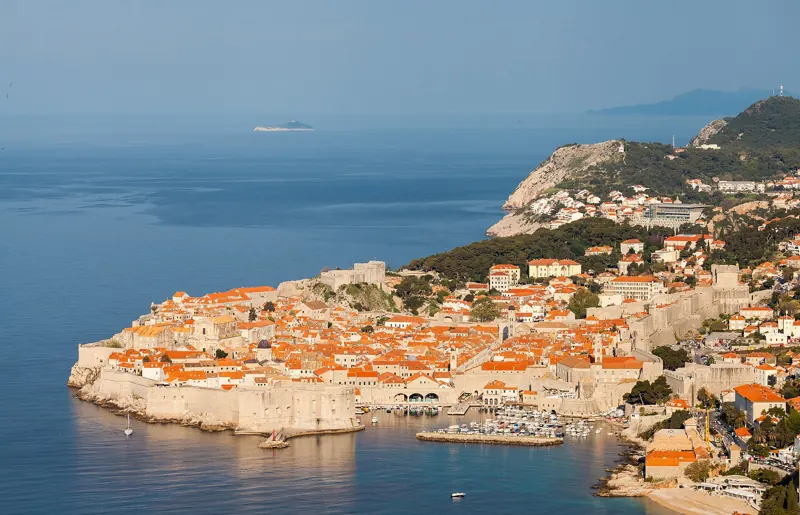
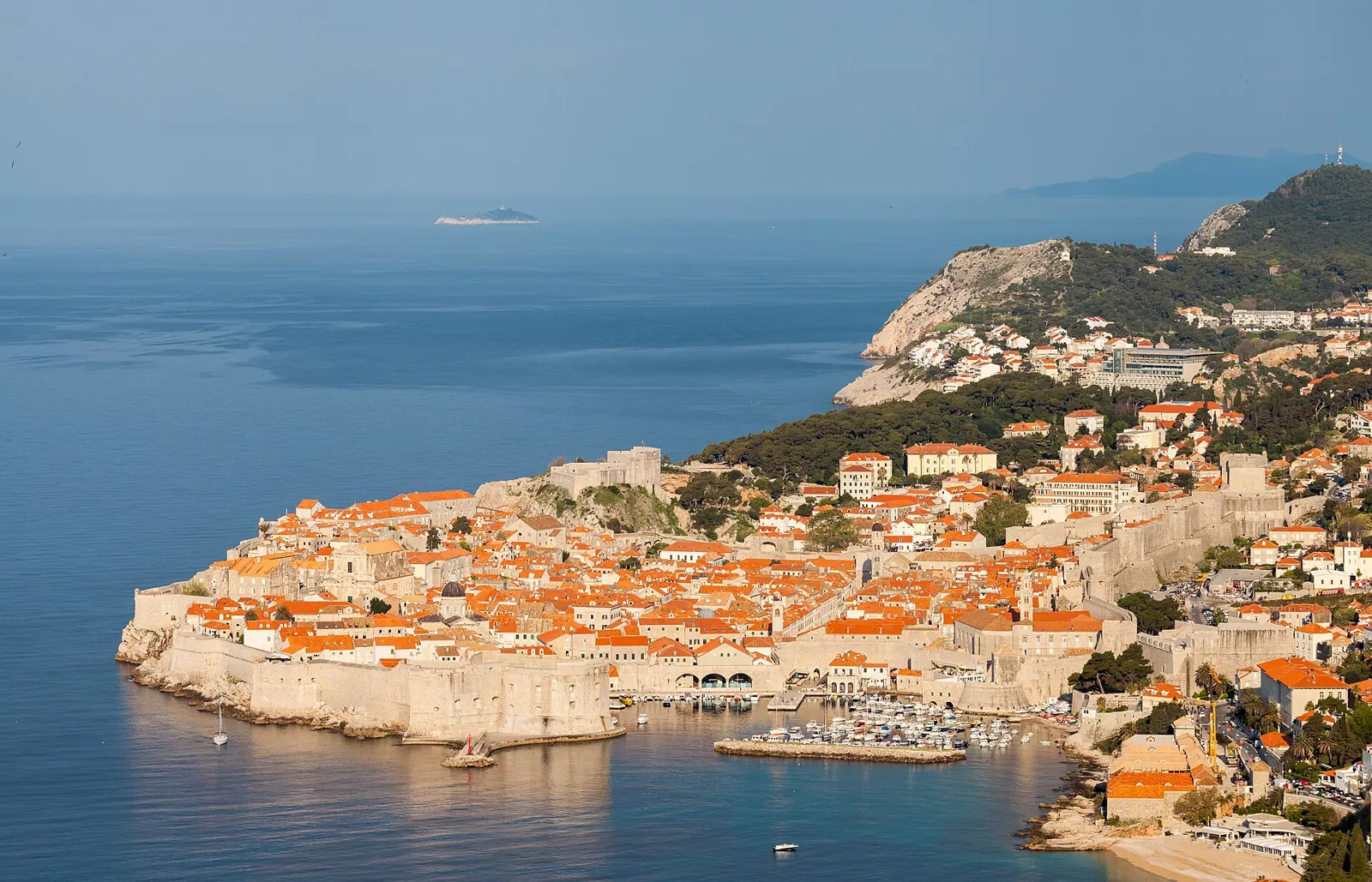
Dubrovnik needs no introduction. The walled Old Town remains one of Europe’s most photographed places. Living here feels like occupying a film set - because it literally has been one.
The trade-off is cost. Dubrovnik runs 30–50% more expensive than Split for housing. Summer brings cruise ship crowds that transform the Old Town into a slow-moving queue from May through September.
| Category | 2026 Estimate |
|---|---|
| 1-bed apartment rent (center) | €800–1,200/month |
| 1-bed apartment rent (outside center) | €550–750/month |
| Property purchase (per m²) | €3,500–6,000 |
| Lifestyle vibe | Prestigious, tourist-heavy, quieter winters |
| Airport | Dubrovnik (DBV), seasonal and year-round routes |
Retirees who choose Dubrovnik tend to settle in Lapad or Gruž, residential neighborhoods with supermarkets, pharmacies, and waterfront walks away from the tourist crush.
Zadar: The Affordable Hidden Gem
Zadar represents the best value on the Dalmatian Coast for retirees who want a walkable old town, an airport with budget airline connections, and a genuine Croatian atmosphere. The city punches above its weight culturally, with the famous Sea Organ and Sun Salutation installations on the waterfront.
| Category | 2026 Estimate |
|---|---|
| 1-bed apartment rent (center) | €400–600/month |
| 1-bed apartment rent (outside center) | €300–450/month |
| Property purchase (per m²) | €2,000–3,200 |
| Lifestyle vibe | Relaxed, authentic, growing international scene |
| Airport | Zadar (ZAD), Ryanair and other budget carrier hub |
Zadar’s position gives easy access to Krka National Park, Paklenica for hiking, and the Kornati Islands for day trips. The city’s food scene rivals Split’s at lower prices. A growing number of Northern European retirees have discovered this, so property prices are climbing.
Šibenik: Authentic Croatian Living
Šibenik attracts retirees who want to live among Croatians rather than other expats. The city’s stunning St. James Cathedral earned UNESCO status. The restaurant and café scene caters to locals, not tourists, keeping prices honest.
- Rent for a 1-bedroom apartment: €350–500/month
- Property prices per m²: €1,800–2,800
- Smallest expat community of the major coastal towns
- Two national parks (Krka and Kornati) within 30 minutes
- Limited direct international flights; Split airport sits 60 minutes south
Makarska: Beach Town Tranquility
The Makarska Riviera stretches along some of the Dalmatian Coast’s finest pebble beaches, backed by the dramatic Biokovo mountain range. Makarska town offers a pleasant central square, good restaurants, and a pace of life that slows to walking speed.
- Rent for a 1-bedroom apartment: €400–550/month
- Property prices per m²: €2,200–3,500
- Stunning natural setting with hiking trails directly from town
- Summer population swells significantly; winter feels very quiet
- Limited public transport; a car becomes essential here
Trogir: Small-Town Charm Near the City
Trogir sits on a tiny island connected by bridges, with a UNESCO-listed old town of Venetian architecture. Split airport lies 7 km away. You get small-town living with big-city access.
- Rent for a 1-bedroom apartment: €400–600/month
- Property prices per m²: €2,500–3,800
- Walkable historic center with daily fish market
- Strong sense of community; neighbors know each other
- Summer tourists crowd the old town; locals adapt around it
Korčula and Hvar: Island Retirement for the Adventurous
Island retirement sounds romantic, and it delivers on that promise from April through October. Korčula offers a miniature Dubrovnik atmosphere without the prices or crowds. Hvar trends younger and livelier but has excellent wine country in its interior.
The honest reality: winter island life requires tolerance for isolation. Ferry schedules reduce. Some restaurants close entirely from November through March. Medical emergencies mean a boat ride to Split.
- Korčula rent: €350–500/month for a 1-bedroom
- Hvar rent: €450–700/month (Hvar Town commands a premium)
- Property on both islands: €2,000–4,000/m² depending on location and sea views
- Best suited for retirees who own a car and embrace seasonal rhythms
Cost of Living Breakdown: Dalmatian Coast 2026
A comfortable retirement on the Dalmatian Coast runs €1,400–2,200 per month for a single person, including rent. Couples sharing an apartment typically spend €1,800–2,800. These figures assume a moderate lifestyle with regular dining out and occasional travel.
Housing: Rent vs. Buy
Renting makes sense for your first year. The market varies dramatically between neighborhoods, and you’ll want time to explore before committing. Long-term rental contracts (12+ months) typically run 20–30% below the prices listed on short-term platforms.
Buying property as a non-EU citizen requires approval from the Ministry of Justice, a process taking 2–6 months. EU citizens face no restrictions. Purchasing costs add roughly 7–8% to the property price (transfer tax, notary, legal fees).
Monthly Living Expenses
| Expense | Budget Estimate | Comfortable Estimate |
|---|---|---|
| Rent (1-bed, outside center) | €350–450 | €500–700 |
| Groceries | €250–300 | €300–400 |
| Utilities (electric, water, internet) | €100–130 | €120–160 |
| Dining out (8–10 meals) | €80–120 | €150–250 |
| Transport (bus pass + occasional taxi) | €40–60 | €60–100 |
| Health insurance | €80–150 | €150–300 |
| Entertainment & misc | €50–100 | €100–200 |
| Monthly total | €950–1,310 | €1,380–2,110 |
Groceries at local markets cost significantly less than supermarkets. A kilogram of fresh fish at Split’s morning market runs €8–15. Local olive oil goes for €8–12 per liter. Croatian wine from Pelješac or Hvar starts at €4–6 for bottles that would cost €15+ abroad.
How Costs Compare to Western Europe and the US
| Category | Croatia (Dalmatia) | Spain (Costa del Sol) | Portugal (Algarve) | US (Florida) |
|---|---|---|---|---|
| 1-bed rent | €400–700 | €600–1,000 | €550–900 | €1,200–1,800 |
| Meal for two (mid-range) | €30–50 | €40–60 | €35–55 | €60–90 |
| Monthly groceries | €250–350 | €300–400 | €280–380 | €400–600 |
| Monthly total (single) | €1,400–2,200 | €1,800–2,800 | €1,600–2,500 | €2,500–4,000 |
The euro adoption in 2023 brought price stability but also some upward rounding. Costs on the Dalmatian Coast rose approximately 10–15% between 2022 and 2025. The coast remains significantly cheaper than Western Mediterranean alternatives.
Croatia Retirement Visa and Residency Options in 2026
Non-EU retirees need a temporary stay permit before moving. Croatia doesn’t offer a dedicated “retirement visa,” but the temporary stay permit for “other purposes” covers retirees with pension or passive income.
Temporary Stay Permit for Retirees
The application requires:
- Valid passport (6+ months remaining)
- Proof of regular income: pension statements or investment income showing minimum €1,200/month (2026 threshold, verify with your nearest Croatian consulate)
- Health insurance valid in Croatia covering the full stay period
- Proof of accommodation: rental contract or property ownership
- Clean criminal record certificate, apostilled
- Passport-size photographs
- Application fee of approximately €70–80
Apply at the Croatian embassy or consulate in your home country before arrival. Processing takes 30–60 days. The initial permit lasts 1 year and is renewable.
Digital Nomad Visa (for Semi-Retired Remote Workers)
If you earn remote income from clients outside Croatia, the digital nomad visa provides a 1-year residence permit without Croatian tax obligations on that income. The 2026 income requirement sits at approximately €2,540/month (or the equivalent annually).
This option works well for semi-retired professionals who consult or freelance. You live in Croatia, earn from abroad, and pay taxes only in your home country or country of tax residence.
EU vs. Non-EU Citizen Pathways
EU/EEA citizens skip most of this paperwork. Register with local police within 90 days of arrival, show proof of health insurance and sufficient funds, and receive a registration certificate. The process takes days, not months.
UK citizens post-Brexit follow the non-EU pathway. The same applies to Americans, Canadians, and Australians.
Path to Permanent Residency
After 5 continuous years of legal temporary residence, you qualify for permanent residency. Requirements include basic Croatian language proficiency (A1–A2 level), continued financial means, and no significant gaps in your residence history. Permanent residents gain most rights of Croatian citizens except voting.
Healthcare for Retirees in Croatia
Croatia’s public healthcare system provides solid coverage at coastal hospitals, though wait times for specialists run longer than in private systems. Most retirees combine public enrollment with a private insurance supplement.
Public Healthcare System (HZZO)
The Croatian Health Insurance Fund (HZZO) covers residents who contribute through employment, pension, or voluntary enrollment. Foreign retirees with temporary residence permits enroll by paying a monthly contribution of approximately €60–80.
Coverage includes GP visits, hospital treatment, emergency care, and subsidized prescriptions. You’ll receive a healthcare card and choose a local GP.
Private Healthcare Options
KBC Split serves as the main regional hospital for central Dalmatia. Dubrovnik General Hospital covers the south. Both handle standard procedures well.
Private clinics in Split and Dubrovnik offer faster access to specialists, dental care, and elective procedures. A private GP consultation costs €40–70. Specialist appointments run €60–120. Dental work remains significantly cheaper than in the US or UK.
Health Insurance Requirements for Expats
Your temporary stay permit requires valid health insurance from day one. Options include:
- HZZO enrollment: €60–80/month, covers public system access
- Croatian private insurance: €100–200/month depending on age and coverage
- International expat policies (Cigna Global, Allianz Care, AXA): €150–400/month, covering private care across Europe
- Combination approach: HZZO for routine care + international policy for repatriation and specialist treatment
Annual health insurance costs for a 60-year-old retiree range from €720 (HZZO only) to €3,600–4,800 (comprehensive international).
Tax Implications for Retirees in Croatia (2026)
You become a Croatian tax resident if you spend 183+ days per year in the country or if Croatia serves as your center of vital interests. Tax residency triggers reporting obligations on worldwide income.
Income Tax on Pensions and Investments
Croatia taxes income at 20% up to €50,400/year and 30% above that threshold (2026 rates). Foreign pensions fall under income tax, but double taxation agreements often provide relief or exemption.
Capital gains on financial assets are taxed at 10%. Rental income faces the standard income tax rates, with allowable deductions for maintenance and depreciation.
Double Taxation Agreements
Croatia maintains double taxation treaties with the US, UK, Canada, Australia, and over 60 other countries. These agreements typically prevent you from paying full tax in both countries.
- US retirees: The US-Croatia treaty allows pension taxation primarily in the country of residence. You’ll still file US returns as a citizen. Foreign tax credits offset Croatian taxes paid.
- UK retirees: State pensions are generally taxable only in Croatia once you become tax resident. Private pensions follow treaty-specific rules.
- Canadian and Australian retirees: Similar treaty provisions apply, with pension articles determining which country has taxing rights.
Always consult a Croatian tax advisor who specializes in expat affairs. Tax situations vary based on pension type, investment structure, and personal circumstances. Budget €200–400 for an initial consultation with a qualified advisor in Split or Dubrovnik.
Daily Life and Culture on the Dalmatian Coast
Life on the coast follows the Mediterranean rhythm: morning coffee lasts an hour, lunch happens at 2 PM, and the evening promenade fills town centers after sunset. Adjusting to this pace takes most Northern Europeans and Americans about three months.
Food, Wine, and Dining Culture
Dalmatian cuisine centers on fresh seafood, olive oil, seasonal vegetables, and grilled meats. The daily fish market dictates restaurant menus. A typical lunch of grilled sea bass with blitva (chard and potatoes) costs €10–15 at a local konoba.
Wine from the Pelješac peninsula (Plavac Mali, Dingač) competes with the best Croatian reds. White wine drinkers should try Pošip from Korčula. Local wine paired with pršut (dry-cured ham) and Paški sir (Pag Island cheese) forms the essential Dalmatian appetizer.
Weekly farmers’ markets (tržnica) operate in every town. Seasonal produce costs 30–50% less than supermarket equivalents. Build your shopping routine around market days.
Language: Getting By and Learning Croatian
English gets you through restaurants, shops, doctors’ offices, and government offices in larger towns. The real challenge comes with bureaucracy, where forms arrive in Croatian and patience runs thin on both sides.
Learning basic Croatian transforms your experience. Start with greetings, numbers, and market vocabulary. Croatian uses Latin script, making signs and menus readable from day one.
- CroatianMadeEasy and Duolingo offer structured online courses
- Local language schools in Split and Zadar charge €10–20 per group lesson
- Private tutors run €15–30/hour
- Most retirees reach functional conversational level within 6–12 months of consistent effort
Social Life and Expat Communities
Split has the largest expat community on the coast, with active Facebook groups, monthly meetups, and organized activities. Expats in Split and Internationals in Croatia serve as the main online communities.
Zadar and Dubrovnik have smaller but growing groups. Šibenik and Makarska attract retirees who prefer integrating with Croatian neighbors over joining expat circles.
Croatian social culture revolves around cafés. The morning coffee ritual isn’t about caffeine - it’s about spending time with people. Joining a regular café table earns you local friendships faster than any organized event.
Seasonal Rhythms: Summer Buzz vs. Winter Calm
Summer brings tourists, higher prices, packed beaches, and a social energy that keeps towns alive until midnight. Winter empties tourist areas dramatically. Some island and small-town restaurants close from November through March.
Retirees who thrive here embrace both seasons. Summer offers festivals, outdoor dining, and beach days. Winter brings quiet walks, lower prices, and the chance to experience towns as locals do. The transition months of April–May and September–October offer the best of both worlds.
Practical Moving Checklist: Relocating to the Dalmatian Coast
Planning your move takes 3–6 months of lead time. Rushing the visa application or arriving without accommodation arranged creates unnecessary stress.
Before You Move
- Apply for your temporary stay permit at the Croatian consulate (allow 30–60 days)
- Apostille all key documents: birth certificate, marriage certificate, criminal background check, pension statements
- Arrange health insurance that meets Croatian requirements before departure
- Ship or sell: most retirees sell furniture and ship only personal items. Shipping a container from the US costs €3,000–5,000
- Notify your bank about the move and research international transfer options (Wise, Revolut, or OFX offer better rates than traditional banks)
- Visit first: spend 2–4 weeks in your target town during the off-season (October–March) before committing
First 30 Days in Croatia
- Register with local police within 48 hours of arrival (your landlord typically handles this)
- Apply for your OIB (Osobni Identifikacijski Broj): Croatia’s personal identification number, needed for everything from banking to utility contracts. Apply at any Tax Administration office with your passport.
- Get a Croatian SIM card: A1, Tele2, or T-Mobile offer prepaid plans starting at €10/month with solid data allowances
- Open a bank account: Zagrebačka banka, PBZ, or OTP Bank are the main options. Bring your passport, OIB, and proof of address. The process takes 1–3 business days.
- Find a local GP: register through the HZZO system once your health insurance is active
Settling In: Banking, Utilities, and Admin
Utility setup happens through your landlord for rentals. If buying, contact HEP (electricity), local water companies, and internet providers (A1, T-Com) directly. Installation takes 1–2 weeks.
Driving license conversion depends on your home country. EU licenses work directly. US, Canadian, and Australian licenses require translation and a Croatian driving exam (theory + practical). Some retirees skip this and rely on buses, ferries, and walking in walkable towns like Split, Zadar, and Trogir.
Croatian bureaucracy moves slowly. Bring a book to government offices. Arrive early. Having a local Croatian speaker accompany you to administrative appointments saves hours of confusion. Some immigration lawyers in Split offer a full relocation assistance package for €500–1,500, handling paperwork, translations, and appointments.
FAQ
Do I need to speak Croatian to retire on the Dalmatian Coast?
English suffices for daily life in major towns like Split, Zadar, and Dubrovnik. Learning basic Croatian phrases improves your experience dramatically and earns genuine goodwill from locals. Government paperwork requires Croatian, so hire a translator for official appointments.
How long does the Croatian temporary stay permit take to process?
Expect 30–60 days from application at your nearest Croatian consulate. Gather all documents, including apostilled certificates and proof of income, before applying. Renewal applications filed within Croatia typically process faster.
Is Croatia a good retirement destination compared to Portugal or Spain?
Croatia offers lower living costs than both, with less expat saturation and more authentic local culture. Portugal and Spain have larger English-speaking communities and more established expat infrastructure. Croatia suits retirees who prefer integration over expat enclaves.
What is the minimum income needed to retire in Croatia?
The 2026 threshold for a temporary stay permit requires approximately €1,200/month in provable pension or passive income. A realistic comfortable budget starts at €1,400–1,800/month including rent in mid-coast towns.
Are Croatian hospitals adequate for retirees with health concerns?
KBC Split provides comprehensive care including cardiology, oncology, and orthopedics. Emergency care meets EU standards. For complex procedures, Zagreb offers Croatia’s top medical facilities, reachable by a 4-hour drive or 45-minute flight. Many retirees maintain international health insurance for the option of treatment elsewhere in the EU.
Do American retirees pay taxes in both the US and Croatia?
The US taxes citizens on worldwide income regardless of residence. The US-Croatia double taxation treaty and foreign tax credits prevent double taxation in practice. You’ll file returns in both countries. A tax advisor experienced in US expat taxation is essential.
What happens on the Dalmatian Coast in winter?
Coastal towns quiet down significantly from November through March. Temperatures stay mild (8–12°C) but rain increases. Some tourist-oriented businesses close seasonally. Split and Zadar maintain full services year-round. Many retirees enjoy the peaceful off-season and use it for travel within Europe.
Is it better to rent or buy property as a retiree in Croatia?
Rent for your first 12–18 months to learn the market and confirm your preferred town. Non-EU buyers need Ministry of Justice approval, adding months to purchases. Buying makes financial sense for long-term stays, as mortgage rates and property taxes remain low by European standards.