Buying property in Uruguay gives American buyers the same rights as Uruguayan citizens, with no permits, quotas, or government approvals in the way.
Foreigners closed over $1.17 billion in real estate during the first half of 2025, settled entirely in US dollars.
This guide covers the process, costs, taxes, financing, and residency.
Can Americans Buy Property in Uruguay? (The Short Answer)
Yes. US citizens hold identical ownership rights to locals, with full freehold title to homes, apartments, coastal lots, and rural land, and zero government approval needed.
Foreigners Have the Same Rights as Citizens
Uruguay’s legal framework treats foreign buyers exactly like nationals. You buy, sell, rent, mortgage, and inherit with no nationality surcharge.
- No ownership caps on urban, coastal, or rural property for private individuals
- No special permits or government sign-off required
- Full freehold title to both the building and the land beneath it
- One narrow exception: farmland over 500 hectares must first be offered to the state colonization institute (INC), a rule applied equally to Uruguayans
Uruguay’s open, transparent acquisition system welcomes foreign capital with no nationality barrier TheLatinvestor.
No Residency or Visa Required to Buy
Ownership and immigration are separate tracks. You buy as a tourist, a temporary visitor, or with no Uruguayan status whatsoever.
A local bank account, visa, or residency permit is not a prerequisite. A Uruguayan tax ID (RUT) becomes necessary only when you earn rental income, take a local mortgage, or put utilities in your name.
Passport-Only Requirement Explained
A valid US passport is the single identity document needed to sign the deed and take title. Nothing else gates the purchase.
If you cannot travel, a power of attorney (poder notarial) lets a local representative sign every closing document and register the property for you. Remote, fully legal purchases from the US are straightforward Uruguay Farms.
The Uruguay Property Market in 2026: What to Expect
Conditions favor American buyers this year. Prices climbed roughly 5% in dollar terms, every transaction settles in US currency, and investment-grade ratings anchor long-term stability.
Montevideo Property Market Overview
The capital is the largest and most liquid market, with a median near $2,700 per square meter. Neighborhood pricing spans a wide band.
- Maroñas: $900–$1,400/m² (affordable entry)
- Ciudad Vieja: $1,800–$2,500/m² (mid-tier, historic)
- Pocitos: $2,500–$3,800/m² (walkable, beachfront)
- Punta Carretas: $2,000–$3,500/m² (upscale, waterfront)
- Carrasco: $3,600–$5,200/m² (top tier, embassy district)
Apartments make up about 72% of inventory, and homes close at 93–95% of asking after roughly 90 days on market.
Punta del Este and Coastal Areas
The Atlantic coast is Uruguay’s luxury and investment segment, driven by Argentine, Brazilian, and growing North American demand. Coastal prices appreciated 8–12% over the prior year.
| Coastal Area | Price (USD/m²) | Profile |
|---|---|---|
| Playa Mansa | $3,500–$6,500 | Calm-water family beach |
| Brava Beach | $4,000–$7,500 | Surf, high prestige |
| La Barra | $5,000–$8,000 | Top of the market |
| José Ignacio | Lower entry | Emerging, strong upside |
Peak summer occupancy in short-term rentals reaches 90–95% during December to February.
Average Prices by Property Type
Absolute Montevideo benchmarks help you anchor a budget before browsing listings.
| Property Type | Average Price (USD) |
|---|---|
| Studio | $110,000 |
| One-bedroom | $160,000 |
| Two-bedroom | $240,000 |
| Three-bedroom (prime) | $420,000 |
| Carrasco house | $900,000 |
Because listings, offers, and closings all run in US dollars, you face no peso conversion friction at purchase TheLatinvestor.
Step-by-Step: How to Buy Property in Uruguay as an American
The path from offer to registered title is chronological and notary-anchored, running 30–60 days for a clean residential deal. Here is each stage.
Step 1: Find a Property and Make an Offer
Once you agree on price, you sign a short letter of intent or reservation form, and the property leaves the market. A bilingual agent familiar with foreign buyers smooths the search, though agents are optional.
Step 2: Hire an Independent Escribano (Notary)
The escribano público is the most important professional in the deal, outranking any attorney. This state-licensed officer is personally liable for the transaction’s legal validity.
Your escribano prepares contracts, runs the title search, holds escrow, and registers the final deed. Always hire your own, never the seller’s. Fees run roughly 3–3.66% of price including VAT.
Step 3: Sign the Boleto de Reserva and Pay Deposit
The boleto de reserva is the first binding contract. It records the property description, agreed price, payment terms, and completion deadlines.
You deposit 10–20% into the escribano’s escrow account, never directly to the seller. Escrow protects both sides until title transfers cleanly.
Step 4: Title Search and Due Diligence
The escribano runs an estudio de títulos, reviewing the ownership chain back a minimum of 30 years to confirm every transfer was legally executed.
- Pulls lien and mortgage certificates from the Registro de la Propiedad
- Verifies tax clearance with the DGI and BPS
- Checks cadastral records at Catastro
- Confirms any condominium fee status
This phase runs 2–4 weeks and is where title defects surface before your money is at risk.
Step 5: Closing and Title Transfer (Escritura)
Both parties or their representatives meet at the notary’s office to sign the escritura definitiva, the authentic public deed. You wire the balance to escrow at this moment.
Legal title transfers the instant you sign. The escribano files the deed for registry inscription, and full legal protection completes 1–3 weeks later La Cité Uruguay.
Buying remotely: Grant a poder notarial to a trusted representative. Sign it before a US notary, apostille it under the Hague Convention, translate it into Spanish, and have a Uruguayan notary protocolize it. Draft the powers narrowly.
Legal Requirements and Documentation for Foreign Buyers
Uruguay’s notary-driven system protects you through built-in state oversight rather than dueling lawyers, and the document load for a US buyer stays light.
Documents You Need as a US Citizen
Assemble these before you open a transaction. Most you already have on hand.
- Valid US passport (primary identity document)
- Proof of US domicile (recent utility bill or bank statement)
- Source-of-funds evidence (6–12 months of statements, tax returns, or portfolio records)
- Civil-status papers such as a marriage certificate, if applicable
- A power of attorney, apostilled and protocolized, only for remote closings
The Role of the Escribano vs a Real Estate Lawyer
The escribano is a neutral state officer, not one party’s advocate, which differs sharply from a US closing attorney. This officer alone executes and registers the deed.
You add a private real estate attorney only for complex matters: corporate ownership structures, tax optimization, or disputes. For a standard residential purchase, your independent escribano covers the full legal workload Jarniascyril.
Legal Timeline and Transaction Duration
A clean residential deal runs 30–60 days from accepted offer to registered title. Reservation takes 1–2 days, due diligence 2–4 weeks, then deed signing and 1–3 weeks for inscription.
Total buyer-side closing costs land near 8–10% of price, a figure you should bake into your budget from day one.
True Cost of Buying Property in Uruguay (2026 Breakdown)
Plan for transaction costs of 8–10% above the sticker price, with a possible spread of 7–12% on complex deals. Below is the line-by-line picture.
Closing Costs and Transfer Tax (ITP)
The ITP transfer tax is 2% of the official cadastral value, not the market price. Because fiscal values sit 30–40% below market, the real burden shrinks.
| Cost Item | Rate | On a $300,000 Home |
|---|---|---|
| ITP transfer tax (buyer) | 2% of fiscal value | $3,600–$4,200 |
| Notary (escribano) fee | ~3% + 22% VAT (~3.66%) | ~$10,980 |
| Agent commission | ~3% + VAT (~3.66%) | ~$10,980 |
| Registration/title search | 0.5–1% | $1,500–$3,000 |
Notary and Registration Fees
The escribano fee is the largest single line, roughly 3% plus 22% VAT for an effective 3.66%. Registration and certificate fees add another 0.5–1%.
These fees buy the 30-year title study and personal notary liability, the core protection in Uruguay’s system La Cité Uruguay.
Real Estate Agent Commission
Under Uruguayan norms, the buyer pays an agent commission of about 3% plus VAT, near 3.66%. This differs from the US, where sellers often absorb the full commission.
Ongoing Property Taxes (Contribución Inmobiliaria)
Annual carrying costs stay modest by US standards. The municipal Contribución Inmobiliaria runs 0.25–0.5% of cadastral value.
- Contribución Inmobiliaria: $500–$2,000/year on a mid-range apartment
- Primaria school tax: small additional charge on cadastral value
- Gastos comunes (HOA): brings monthly carrying costs to $150–$500
- Impuesto al Patrimonio (wealth tax): non-residents pay 0.7–1.5% on Uruguayan assets above a low threshold
Cadastral valuations soften every one of these figures versus nominal rates PropertyInUruguay.com.
Financing and Mortgages: Can Foreigners Get a Loan?
Most Americans pay cash. Local mortgages for non-resident foreigners are scarce, expensive, and capped at low loan-to-value ratios.
Mortgage Availability for Non-Residents
A conventional Uruguayan mortgage without local credit history has long been near impossible. The rare qualifying loan carries steep terms.
- Interest rates of 5–8% on private or bank financing
- Loan-to-value capped near 50–70%
- Down payments of 30–50% of value
- Rural parcels almost always demand all-cash
Cash Purchases vs Local Financing
Cash buyers gain real negotiating leverage, often securing lower prices or better terms. Three practical alternatives let you arrive with cash in hand.
- US home equity or HELOC: tap stateside equity at domestic rates
- Developer payment plans: new builds over 5–10 years with 30–50% down
- Seller financing: resale deals over 1–2 years, formalized through a notarized hipoteca
Transferring Funds from the US (Wise, XE, OFX)
Specialist transfer services beat traditional bank wires loaded with SWIFT fees and rate markups. Compare the three leaders below.
| Service | Fixed Fee | Rate Margin | Best For |
|---|---|---|---|
| Wise | From ~0.35% | Mid-market, no markup | Transparency, smaller sums |
| OFX | None over $10,000 | ~0.4–2%, shrinks with size | Large transfers above $7,000–$10,000 |
| XE | None | Competes with OFX | Large transfers |
For property-sized sums, OFX typically edges out Wise on total cost. Document the source of every dollar, since Uruguay enforces strict anti-money-laundering rules Transumo.
Property Ownership and Uruguayan Residency
Owning a home does not hand you residency. Uruguay has no property-owner visa, though your purchase strengthens a separate residency application.
Does Buying Property Grant Residency?
Ownership counts as evidence of genuine ties to Uruguay, and rental income supports the income test. Residency itself runs through a distinct immigration process based on income or investment.
The Pensionado / Rentista Path for Retirees
American retirees most often apply through two routes built for stable foreign income. Both assess applications case by case.
- Pensionista: for retirees drawing a foreign pension, including US Social Security
- Rentista: for those with passive income from dividends, rents, or annuities
- Both expect roughly $1,500/month in passive income for a single applicant
- Processing takes 6–12 months, leading directly to permanent residency
- Citizenship follows after 3 years (married to a Uruguayan) or 5 years (single)
Tax Residency Considerations
Uruguay’s longstanding territorial tax system shifted on January 1, 2026. Law 20.446 brought foreign-source capital income into the tax base at 12%.
New tax residents elect an 11-year holiday: 0% for years 1–11, 6% for years 12–16, then 12%. Reaching the holiday through investment now requires a $2 million real estate purchase plus 60 days of annual presence.
No US–Uruguay tax treaty exists, so manage double-taxation exposure with US foreign tax credits and a cross-border advisor Greenback Tax Services.
Best Places to Buy: Neighborhood and Region Guide
Three distinct markets serve three buyer types. Match the location to your lifestyle and budget before you fall for a listing.
Montevideo: Pocitos, Punta Carretas, Carrasco
The capital suits full-time retirees who want walkability, year-round amenities, and hospital access at moderate prices.
| Neighborhood | Price (USD/m²) | Best For |
|---|---|---|
| Pocitos | $2,500–$3,800 | Walkable, social, 5–5.5% yields |
| Punta Carretas | $2,000–$3,500 | Retirees wanting healthcare nearby |
| Carrasco | ~$4,266 avg | Families, top schools, security |
Punta Carretas earns the top retiree pick for its Rambla promenade, mall, golf, and hospital proximity TheLatinvestor.
Punta del Este and the Coast
Uruguay’s priciest market suits wealthy seasonal residents and short-term rental investors. Standard apartments average $4,000/m², luxury beachfront runs $7,000–$10,000/m².
Peak-season rents reach $3,000–$5,000/month from December to February. Outside prime beachfront, annual occupancy drops near 38%, so budget-minded full-time retirees look elsewhere.
Colonia del Sacramento and Inland Towns
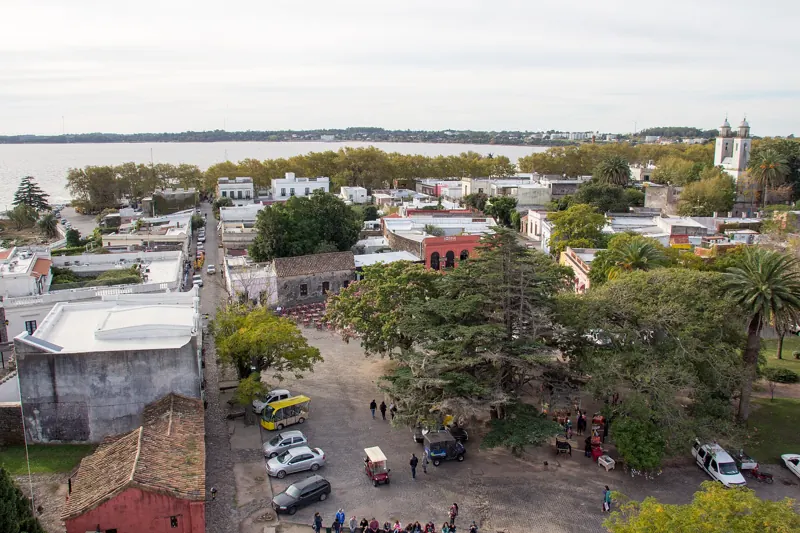
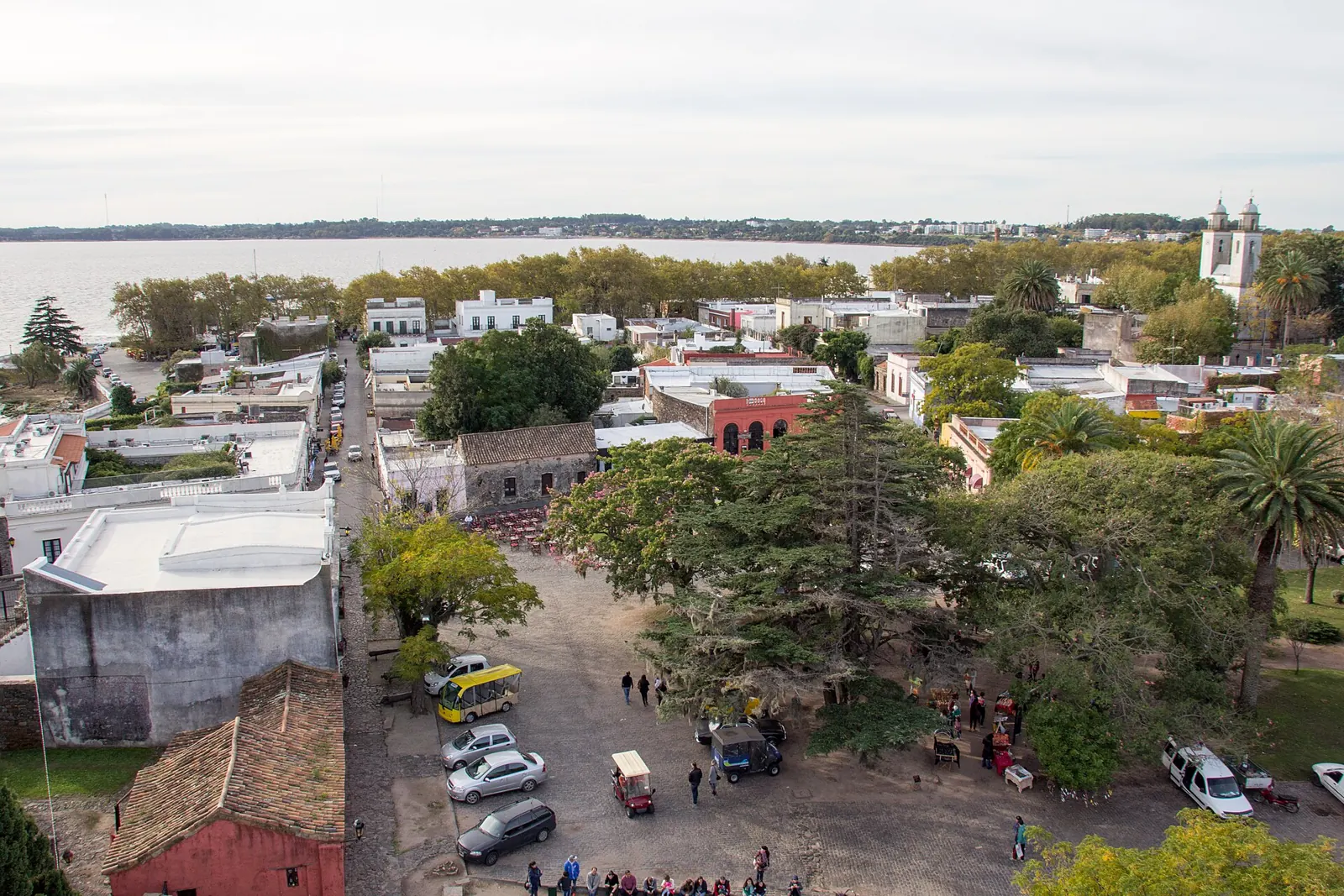
This UNESCO-listed colonial town of 27,000 prices roughly 50% below coastal hotspots. A 3-room apartment runs about $48,000.
Colonia sits 75 minutes by ferry from Buenos Aires and 2 hours by road from Montevideo. Local healthcare is limited, so most expats use Montevideo for specialist care. It fits culture-oriented, budget-conscious retirees.
Rental Investment Potential and Property Management
Uruguay offers two rental profiles: steady long-term income in Montevideo and high-intensity seasonal income on the coast. Pick based on how hands-on you want to be.
Long-Term vs Seasonal Rental Yields
Montevideo delivers predictable, low-vacancy returns from professionals, students, and families. Punta del Este concentrates income into a three-month window.
| Market | Gross Yield | Net Yield | Pattern |
|---|---|---|---|
| Montevideo (Pocitos, Palermo) | 5–7% | 4.0–4.8% | Year-round, stable |
| Punta del Este | 6–9.89% peak | 3.2–3.5% | Dec–Feb seasonal spike |
A core-satellite strategy pairs stable Montevideo apartments with higher-upside coastal units.
Hiring a Property Management Company
Remote owners in the US need a local firm to handle tenant screening, leases, rent collection, maintenance, and tax compliance. Fees run 8–12% of monthly rent for long-term rentals.
Non-resident rental income carries the IRNR tax at a 12% headline rate on gross rent, falling to an effective 8–12% after deductions. Your property manager withholds and remits it to the DGI, easing your paperwork Real Estate in Uruguay.
Common Pitfalls and Mistakes to Avoid
Smart buyers lose money in Uruguay by skipping the system, not by trusting it. Three mistakes cause the most damage.
Skipping Independent Due Diligence
Using the seller’s escribano leaves you with no legal advocate, since that officer answers to the seller. Hire your own to run the full 30-year title study and certificate checks.
Unpaid municipal taxes and building charges attach to the padrón and transfer to you the moment you sign. Never rush the 30–60 day due-diligence window because an agent claims competing offers exist TheLatinvestor.
Underestimating Total Costs
Budgeting only the sale price blindsides buyers with 7–12% in closing costs. On a $200,000 home, that is $14,000–$24,000 extra.
The round-trip cost of buying then reselling runs about 11% of value, which makes short-term flipping a losing game.
Currency and Exit Strategy Risks
USD pricing shields your purchase from peso swings, but peso-denominated rent loses real value over time. Resale liquidity is strong in prime Montevideo and thin in rural areas and coastal towns outside Punta del Este.
About 75% of foreign buyers historically are Argentine, so an Argentine downturn suppresses resale demand. Plan a 5–7 year minimum hold.
Uruguay vs Other Latin American Destinations for Retirees
Uruguay wins on rule of law, property security, and stability, trading rock-bottom cost for institutional predictability. It is the regional premium choice.
| Metric | Uruguay | Mexico | Colombia | Costa Rica |
|---|---|---|---|---|
| Corruption index (2024) | 76 (#1 LatAm) | 31 | 42 | 54 |
| Cheaper than US | ~42% | ~53% | ~67% | ~33.5% |
| Foreign ownership | No restrictions | Fideicomiso near coasts | Lawyer advised | Open |
| Investment-grade rating | All three agencies | No | No | No |
Uruguay is the only country here holding investment-grade ratings from Moody’s, Fitch, and S&P at once. Notaries are legally bound to research 30 years of title history, giving you transactional clarity Mexico’s coastal trust system and Colombia’s variable due diligence cannot match The Good Life Journey.
For retirees who value enforceable property rights and low corruption over maximum savings, the “Switzerland of South America” label holds up.
FAQ
Do I need to be a resident to buy property in Uruguay?
No. You buy as a tourist or with no Uruguayan status at all. Ownership and residency are separate processes, and a valid US passport is the only identity document required to sign the deed.
How long does a typical purchase take?
A clean residential transaction runs 30–60 days from accepted offer to registered title. Reservation takes 1–2 days, due diligence 2–4 weeks, then deed signing and 1–3 weeks for registry inscription before your protection completes.
Can I buy property in Uruguay without visiting?
Yes. Grant a power of attorney to a local representative, sign it before a US notary, apostille it under the Hague Convention, translate it into Spanish, and have a Uruguayan notary protocolize it. Your representative then closes on your behalf.
What are the total costs beyond the purchase price?
Budget 8–10% of price for closing costs. This covers the 2% ITP transfer tax on fiscal value, notary fees near 3.66%, an agent commission near 3.66%, and registration costs of 0.5–1%.
Are property taxes high for foreign owners?
No. Annual Contribución Inmobiliaria runs 0.25–0.5% of cadastral value, often $500–$2,000 for a mid-range apartment. Cadastral values sit well below market, softening every annual charge you face.
Will buying property get me Uruguayan residency?
Not automatically. Uruguay has no property-owner visa, but your purchase supports a residency application. Retirees usually apply through the Pensionista or Rentista routes, each needing roughly $1,500/month in passive income.
How do Americans pay tax on Uruguayan rental income?
Non-residents owe IRNR at a 12% headline rate on gross rent, falling to an effective 8–12% after deductions. Your property manager withholds and remits it to the DGI, and no US–Uruguay treaty exists, so plan for foreign tax credits.
Is financing available, or must I pay cash?
Most Americans pay cash. Local mortgages for non-residents are limited, with 5–8% rates and 30–50% down payments. Many buyers tap a US HELOC, developer payment plans, or seller financing instead.