Montenegro offers retirees a rare combination: Mediterranean coastline, low taxes, and living costs 50-60% below Western Europe.
The country’s EU candidate status means early movers lock in today’s prices before accession drives them up.
Here’s a detailed kotor vs budva vs podgorica montenegro retirement comparison to help you pick the right city.
Why Retire in Montenegro in 2026?
Montenegro delivers a European lifestyle at Balkan prices, with a tax system designed to attract foreign residents. The country sits on the Adriatic coast between Croatia and Albania, offering retirees stunning scenery without the price tags of its EU neighbors.
EU Accession Progress and What It Means for Expats
Montenegro opened EU accession negotiations in 2012 and remains the most advanced Western Balkan candidate. For retirees arriving in 2026, this creates a window of opportunity.
- Property prices remain well below EU coastal averages. Croatian waterfront apartments doubled after EU entry in 2013
- Residency permits for non-EU citizens are straightforward now. Post-accession rules will likely tighten
- The euro is already Montenegro’s official currency, eliminating exchange rate risk
- Infrastructure investment continues flowing from EU pre-accession funds
Getting established before accession means benefiting from both current affordability and future appreciation.
Tax Advantages for Retirees
Montenegro’s flat 15% personal income tax rate applies to worldwide income for tax residents. This straightforward system avoids the complex brackets retirees face in most Western countries.
- Foreign pensions receive favorable treatment under several double taxation treaties
- No wealth tax, no inheritance tax for direct heirs
- Corporate tax sits at 9% for those establishing a company to purchase property
- The 183-day rule determines tax residency. Spend more than half the year in Montenegro, and you become a tax resident
Many retirees structure their finances to minimize tax liability legally. A local advisor in Podgorica typically charges €50-100 per consultation.
Residence Permit Options for Retirees
The temporary residence permit process for retirees requires proof of sufficient funds, health insurance, and accommodation.
- Application fee: approximately €150-200
- Processing timeline: 30-60 days
- Required documents: passport, proof of income or savings, private health insurance, rental contract or property deed, clean criminal record
- Initial permit lasts one year, renewable annually
- After five years of continuous residence, permanent residency becomes available
The process is manageable without a lawyer, though hiring one (around €300-500) speeds things up considerably.
Montenegro remains one of Europe’s safest countries. Violent crime is rare, and locals are genuinely welcoming toward foreign residents.
Kotor: The Historic Bay Town
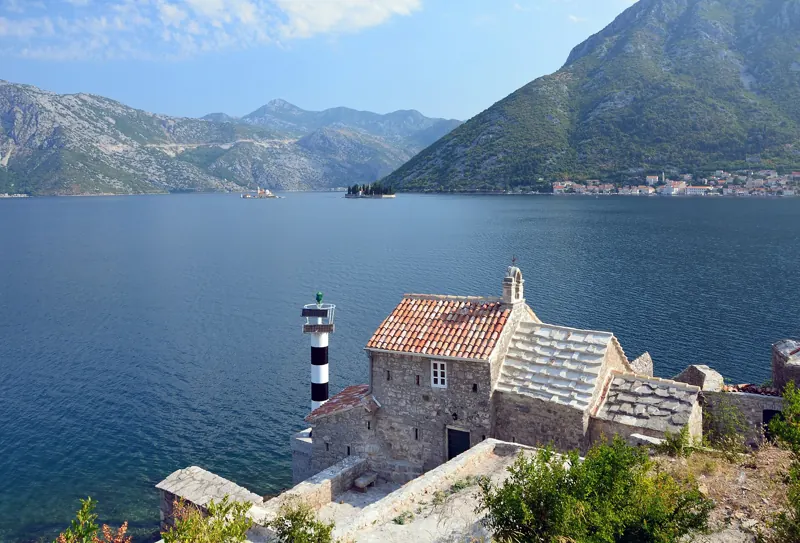
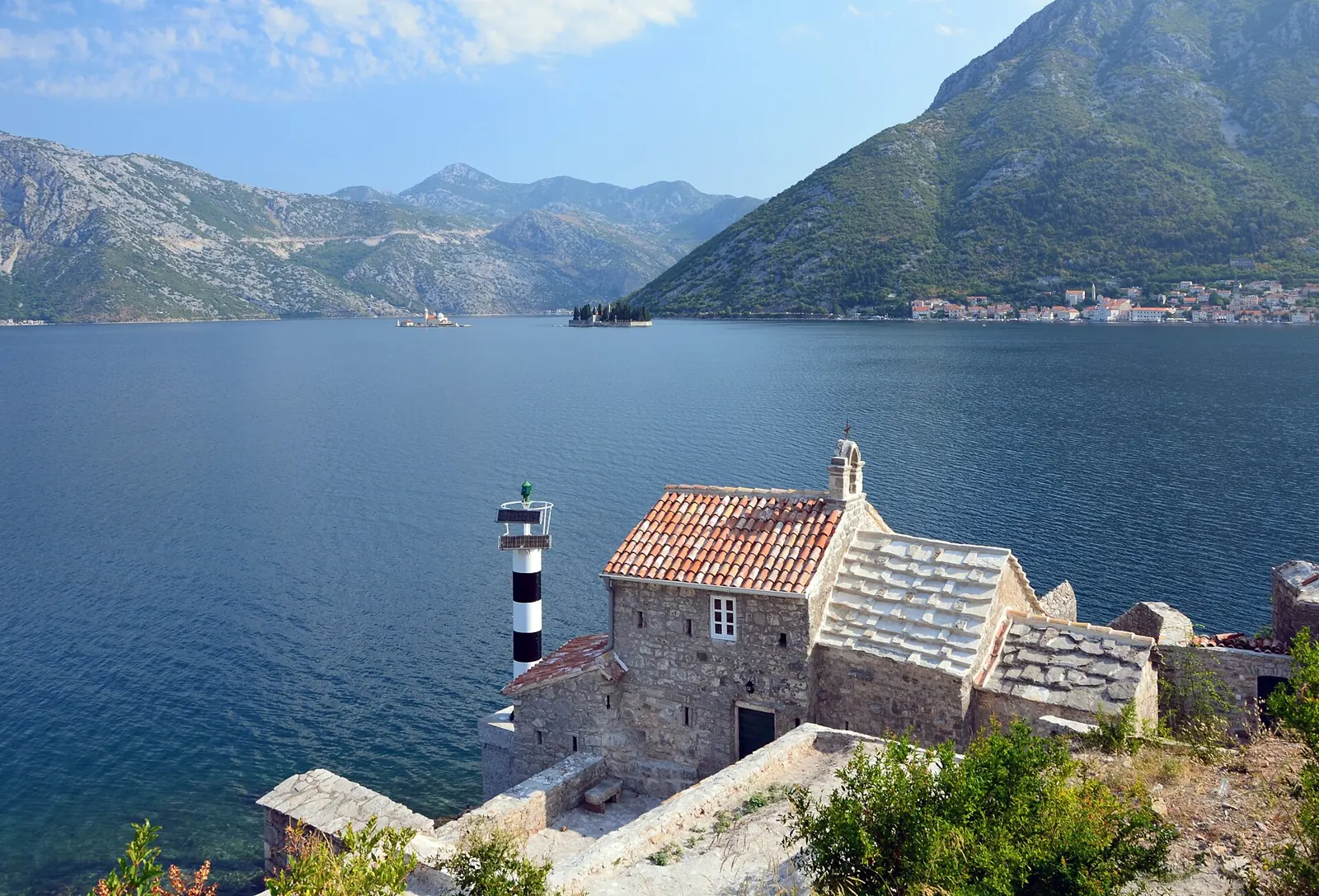
Kotor retirement appeals to those who want beauty over convenience. This UNESCO-listed town wraps around a dramatic bay with medieval walls climbing the mountainside behind it.
Lifestyle and Atmosphere
Daily life in Kotor moves at a pace that rewards patience. Morning coffee at a waterfront café, afternoon walks along the bay promenade, evening dinners in centuries-old squares.
- The Old Town holds roughly 3,000 residents year-round. You will recognize faces within weeks
- Dobrota and Prčanj, villages along the bay, host the most established expat community
- Cultural events run regularly: classical music in churches, art exhibitions, film screenings
- Sailing, hiking, and cycling are accessible directly from town
Winters bring genuine quiet. Tourist crowds vanish from October through April, leaving Kotor to its residents. Some retirees love this seasonal rhythm. Others find January through March isolating.
Cost of Living in Kotor 2026
A comfortable Kotor retirement budget runs €1,200-€1,800 per month for a single retiree or couple without extravagant spending.
| Expense | Monthly Cost (€) |
|---|---|
| One-bedroom apartment rent | 450-700 |
| Groceries | 250-350 |
| Utilities (electric, water, internet) | 100-150 |
| Dining out (2-3x/week) | 150-250 |
| Health insurance (private) | 50-100 |
| Transport | 50-100 |
| Miscellaneous | 100-150 |
Farmers’ markets along the bay sell local produce at prices that make supermarkets feel unnecessary. A kilo of tomatoes runs €1-1.50 in season.
Healthcare Access
Kotor’s hospital handles basic care, emergencies, and routine checkups. For anything specialized, you travel to Podgorica (90 minutes by car) or across the border to Dubrovnik.
- Private clinics offer dental and general practice at reasonable rates
- A standard doctor visit costs €30-50 at private facilities
- Pharmacy network covers common medications
- Serious conditions require transfer to Podgorica’s Clinical Center or medical tourism to neighboring countries
Retirees with chronic conditions should factor Podgorica travel into their planning.
Property Market and Rental Prices
Property prices in Kotor range from €2,000-€3,500 per square meter depending on bay views and Old Town proximity.
- A 60m² apartment with a bay view: €150,000-€210,000
- Old Town properties command premium prices and often need renovation
- Dobrota offers the best value for retirees: newer construction, bay views, walkable to Old Town
- Rental market tightens in summer. Sign long-term leases in autumn for better rates
Pros and Cons for Retirees
Pros:
– Extraordinary natural beauty every single day
– Tight-knit community where you belong quickly
– Quiet, contemplative pace of life
– Rich cultural and historical surroundings
Cons:
– Limited healthcare for serious conditions
– Hilly terrain challenges those with mobility issues
– Summer cruise ship crowds flood the Old Town
– Fewer shopping and dining options than Budva or Podgorica
Budva: The Coastal Resort City
Budva retirement suits retirees who want beach access, social activity, and the largest English-speaking expat community on Montenegro’s coast.
Lifestyle and Atmosphere
Budva splits into two personalities. Summer brings packed beaches, late-night restaurants, and an energy that feels more Ibiza than Balkans. The shoulder seasons (April-May, September-October) reveal Budva’s sweet spot: warm weather, open restaurants, manageable crowds.
- The Old Town peninsula offers charm rivaling Kotor on a smaller scale
- Beach access defines daily life. Morning swims from October into May are common
- Flat waterfront promenades stretch for kilometers, ideal for daily walks
- International restaurants, cafés, and bars cater to diverse tastes
Cost of Living in Budva 2026
Tourist-driven pricing pushes Budva slightly above Kotor, with monthly costs of €1,300-€2,000 for comfortable living.
| Expense | Monthly Cost (€) |
|---|---|
| One-bedroom apartment rent | 500-800 |
| Groceries | 250-350 |
| Utilities (electric, water, internet) | 100-150 |
| Dining out (2-3x/week) | 200-300 |
| Health insurance (private) | 50-100 |
| Transport | 50-100 |
| Miscellaneous | 100-150 |
Bečići and Rafailovići, beach towns flanking Budva, offer 10-20% lower rents with equal beach access.
Healthcare Access
Budva’s medical facilities surpass Kotor’s, with a general hospital and several private clinics.
- Private dental clinics offer quality work at €40-80 per visit
- General practitioners are accessible within days, not weeks
- The hospital handles emergencies and common procedures
- Specialized care still requires Podgorica (75 minutes by road)
Property Market and Rental Prices
Property prices in central Budva run €2,500-€4,000 per square meter, the highest of the three cities.
- A 60m² apartment in central Budva: €150,000-€240,000
- Bečići and Rafailovići: €1,800-€3,000/m², better value with beach proximity
- New construction along the coast offers modern amenities and energy efficiency
- Year-round rental contracts are easier to negotiate than in Kotor
Pros and Cons for Retirees
Pros:
– Best beach lifestyle of the three cities
– Largest, most active expat community
– Flat terrain, walkable waterfront
– Most dining and entertainment options on the coast
Cons:
– Summer noise and crowds overwhelm some retirees
– Higher prices driven by tourism
– Still limited specialized healthcare
– Feels less “authentic” than Kotor during peak season
Podgorica: The Capital City
Podgorica retirement prioritizes practicality. The capital offers the lowest costs, best healthcare, and most complete urban infrastructure of any Montenegrin city.
Lifestyle and Atmosphere
Podgorica lacks the postcard beauty of the coast. It compensates with the daily conveniences retirees use most: modern supermarkets, reliable public transport, accessible government offices, and proper healthcare.
- Shopping centers (Delta City, Mall of Montenegro) carry international brands
- International restaurants serve cuisines rare on the coast
- Parks along the Morača River provide green space for walks
- A growing digital nomad and expat community brings international energy
The city feels more Eastern European modern than Mediterranean charming. Retirees choosing Podgorica prioritize function over aesthetics.
Cost of Living in Podgorica 2026
Podgorica offers the lowest cost of living of the three cities at €1,000-€1,500 per month for a comfortable lifestyle.
| Expense | Monthly Cost (€) |
|---|---|
| One-bedroom apartment rent | 350-550 |
| Groceries | 200-300 |
| Utilities (electric, water, internet) | 80-130 |
| Dining out (2-3x/week) | 120-200 |
| Health insurance (private) | 50-100 |
| Transport | 40-80 |
| Miscellaneous | 80-120 |
Local markets and discount supermarkets push grocery bills even lower. Dining out costs 30-40% less than coastal cities.
Healthcare Access
Podgorica has the best healthcare infrastructure in Montenegro. The Clinical Center of Montenegro handles specialized treatments, surgeries, and complex diagnostics that coastal hospitals redirect here.
- Public healthcare available to residents with contributions
- Private clinics cover dentistry, ophthalmology, orthopedics, and more
- Specialist appointments available within 1-2 weeks at private facilities
- Pharmacies stock a wider range of medications than coastal towns
- Medical tourism infrastructure includes English-speaking staff at major facilities
For retirees with ongoing health needs, Podgorica’s medical access alone justifies choosing the capital.
Property Market and Rental Prices
Property prices in Podgorica sit at €1,500-€2,500 per square meter, making homeownership accessible on a moderate retirement budget.
- A 60m² apartment in a good neighborhood: €90,000-€150,000
- City Center, Zabjelo, and Preko Morače offer the best residential neighborhoods
- New construction is abundant, with modern insulation and energy systems
- Rental market favors tenants year-round, with no seasonal fluctuation
Pros and Cons for Retirees
Pros:
– Lowest cost of living among the three cities
– Best healthcare facilities in the country
– International airport with direct European flights
– Full urban amenities and government services
Cons:
– Hot summers exceeding 40°C without sea breeze
– No beach access. The coast is 60-90 minutes away
– Less scenic than coastal alternatives
– Smaller cultural and social scene compared to its size
Side-by-Side Comparison: Kotor vs Budva vs Podgorica
This Montenegro retirement comparison puts the three cities head to head across the factors retirees care about most.
Cost of Living Comparison Table
| Category | Kotor | Budva | Podgorica |
|---|---|---|---|
| Monthly budget (comfortable) | €1,200-1,800 | €1,300-2,000 | €1,000-1,500 |
| 1BR apartment rent | €450-700 | €500-800 | €350-550 |
| Groceries | €250-350 | €250-350 | €200-300 |
| Dining out (per meal) | €8-15 | €10-18 | €6-12 |
| Property price (per m²) | €2,000-3,500 | €2,500-4,000 | €1,500-2,500 |
Healthcare Quality Comparison
| Factor | Kotor | Budva | Podgorica |
|---|---|---|---|
| Hospital level | Basic | General | Specialized |
| Private clinics | Few | Several | Many |
| Specialist access | Limited | Limited | Good |
| Emergency care | Basic | Adequate | Full |
| English-speaking doctors | Rare | Some | Common |
Podgorica wins healthcare decisively. Coastal retirees should budget for occasional Podgorica medical trips.
Climate and Weather Comparison
| Season | Kotor | Budva | Podgorica |
|---|---|---|---|
| Summer highs | 30-33°C | 30-33°C | 35-42°C |
| Winter lows | 3-8°C | 4-9°C | -2 to 5°C |
| Annual rainfall | High (bay effect) | Moderate | Moderate |
| Swimming season | May-October | May-October | N/A |
| Best months | Apr-Jun, Sep-Oct | May-Jun, Sep-Oct | Apr-Jun, Sep-Oct |
Kotor receives significantly more rainfall than Budva due to the bay’s geography. Podgorica’s continental summers are genuinely brutal.
Expat Community Size and Activity
Budva hosts the largest expat community with active social groups, regular meetups, and English widely spoken in shops and restaurants. Kotor’s community is smaller but deeply connected. Podgorica’s expat scene skews younger, with digital nomads and professionals rather than retirees.
Internet and Digital Infrastructure
All three cities deliver 50-100 Mbps broadband in newer buildings with fiber connections. Mobile data coverage (4G/5G) works reliably throughout urban areas.
- Podgorica offers the most reliable infrastructure overall
- Kotor Old Town has connectivity limitations in some historic buildings
- All cities support video calls, streaming, and remote banking without issues
Visa, Residency, and Legal Requirements for 2026
Temporary Residence Permit Process
The residence permit application follows a consistent process regardless of which city you choose, though you submit paperwork at the local police station.
- Gather documents: passport, proof of funds, health insurance, accommodation proof, criminal background check (apostilled)
- Visit the local police station’s foreigners department
- Submit application with fee payment (€150-200)
- Receive confirmation receipt. Processing takes 30-60 days
- Collect your residence card upon approval
- Renew annually for five years before applying for permanent residence
Property Ownership Rules for Foreigners
Foreign individuals cannot directly buy property in Montenegro in most cases. The standard workaround: establish a Montenegrin LLC (d.o.o.) and purchase property through the company.
- Company formation costs approximately €500-800 through a lawyer
- Annual maintenance costs for the company run €300-500
- Some bilateral agreements allow direct purchase. Check your nationality’s specific rules
- The property buying legal process takes 30-60 days from offer to registered ownership
Banking and Financial Setup
Opening a Montenegrin bank account requires a personal visit with your passport, residence permit (or application receipt), and proof of address.
- CKB (Erste Group) and NLB are popular choices among expats for international transfer capabilities
- Account opening takes 1-3 business days
- Online banking is standard at all major banks
- Podgorica branches handle complex requests faster than coastal branches
- International transfers via SWIFT work reliably. SEPA transfers are available at some banks
Tax Implications and Financial Planning for Retirees
Montenegro’s Tax System for Foreign Retirees
Montenegro’s flat 15% personal income tax applies to worldwide income once you become a tax resident. This simplicity is refreshing compared to progressive Western systems.
- The 183-day rule triggers tax residency. Spend 183+ days in Montenegro during a calendar year, and your worldwide income becomes taxable
- Capital gains on property are taxed at 15% on the profit
- Rental income from Montenegrin property faces 15% tax
- No wealth tax exists. Your savings and investments outside Montenegro are not taxed on their value, only on realized gains
Double Taxation Treaties
Montenegro maintains double taxation treaties with over 40 countries. These agreements prevent you from paying tax on the same income in both Montenegro and your home country.
Check treaty coverage with your home country before relocating. Key provisions typically address pension income, investment returns, and property gains.
Pension Income and Foreign Income Treatment
Foreign pension income treatment depends on your home country’s treaty with Montenegro. In many cases, pensions are taxed only in the paying country, leaving your Montenegrin tax bill focused on other income sources.
Hiring a local tax advisor costs €50-100 per session. This investment prevents costly mistakes in your first year. Ask expat groups for recommendations. Most qualified advisors operate from Podgorica.
Which City Is Right for Your Retirement Style?
Choosing between these three cities comes down to what you value most in daily life. Each city dominates in its category.
Best for Budget-Conscious Retirees
Podgorica delivers the most retirement per euro. Lower rents, cheaper dining, and affordable property make your savings stretch further. A couple living comfortably on €1,200/month in Podgorica would need €1,600+ for the same standard in Budva.
Best for Beach and Outdoor Lovers
Budva offers the best beach access with flat promenades, swimming from spring through autumn, and coastal hiking trails in both directions. Retirees who measure quality of life by proximity to the sea will find Budva the obvious choice.
Best for Healthcare and Convenience
Podgorica wins again. The Clinical Center of Montenegro, international airport, full government services, and modern shopping infrastructure make the capital the practical choice for retirees prioritizing healthcare access and daily convenience.
Best for Culture and History Enthusiasts
Kotor is irreplaceable for retirees who feed on history, architecture, and natural drama. Walking through a UNESCO World Heritage site every morning changes the texture of retirement.
Consider Splitting Time
Many experienced Montenegro retirees rent in two locations seasonally. A common pattern: a Podgorica apartment as a home base (low rent, good healthcare) with summer months in a coastal rental. This approach costs roughly €1,500-€2,000/month combined and delivers the best of both worlds.
Cultural Adaptation and Practical Tips
Language Barriers and Learning Resources
Montenegrin (essentially Serbian with local variations) is the official language. Younger Montenegrins under 35 speak English confidently. Older generations rely on Montenegrin, Russian, or German.
- Learning basics transforms daily interactions. Greetings, numbers, and food vocabulary go far
- Language apps (Duolingo covers Serbian/Croatian) provide a starting foundation
- Private tutors charge €10-20/hour in all three cities
- Google Translate handles written communication for official documents
Making Friends and Building Community
Expat Facebook groups exist for each city and for Montenegro broadly. These groups answer questions, organize meetups, and provide genuine support.
- Budva has the most active English-speaking social calendar
- Kotor’s community bonds deeply through smaller, regular gatherings
- Podgorica’s international community centers on professional and digital nomad events
- Local friendships develop through coffee culture. Accept every coffee invitation
Daily Life and Local Customs
Montenegrin coffee culture structures social life. A morning coffee (always espresso-based) at a neighborhood café is a ritual, not a quick stop. Expect to sit for 30-60 minutes.
- Afternoon rest (roughly 2-5 PM) means some shops close. Plan errands around this
- Family ties are central. Neighbors will bring you food. Accept graciously
- Farmers’ markets operate weekly in all three cities. Prices run 30-50% below supermarkets for seasonal produce
- A car is helpful in Kotor and Budva. Podgorica has adequate public bus service for most needs
- Driving license conversion from EU/US licenses requires a medical exam and administrative fee
FAQ
Do I need to speak Montenegrin to retire in Montenegro?
No. English works for daily life in tourist-facing businesses, especially in Budva and Kotor. Government offices and healthcare facilities often require Montenegrin, but translators are affordable at €20-30 per appointment.
How safe is Montenegro for foreign retirees?
Montenegro ranks among Europe’s safest countries. Violent crime against foreigners is extremely rare. Petty theft exists in tourist areas during summer but stays well below Southern European averages.
Is Montenegro’s healthcare good enough for retirees with chronic conditions?
Podgorica’s Clinical Center handles most chronic condition management. For specialized procedures (cardiac surgery, oncology), retirees typically travel to Serbia, Turkey, or Western Europe. Private health insurance covering medical evacuation costs €100-150/month.
How long does the Montenegro residence permit take to process?
Expect 30-60 days from submission to approval. The process starts at your local police station’s foreigners department. Having all documents apostilled and translated before arrival saves weeks of delays.
What happens to my residence status when Montenegro joins the EU?
Existing legal residents typically receive protected status during EU transitions, as happened in Croatia. Your established residency should convert to EU-compatible status, though specific terms remain subject to accession negotiations.
Is it better to rent or buy property as a retiree in Montenegro?
Rent first for at least 12 months. This lets you experience seasonal changes, explore neighborhoods, and confirm your city choice before committing. Property purchase through a d.o.o. adds legal complexity worth understanding before diving in.
Do Montenegrin banks accept international pension transfers?
Yes. Major banks like CKB and NLB receive SWIFT transfers from international pension providers. Setup takes 1-2 weeks after account opening. Monthly transfer fees run €5-15 depending on your sending bank.
What is the best time of year to visit Montenegro before committing to retirement?
Visit in January or February first. Montenegro’s coast is stunning in summer, and every city looks appealing. Winter reveals the reality: quieter social scenes, limited services, and weather patterns you will live with for months each year. A winter visit prevents romantic decision-making.