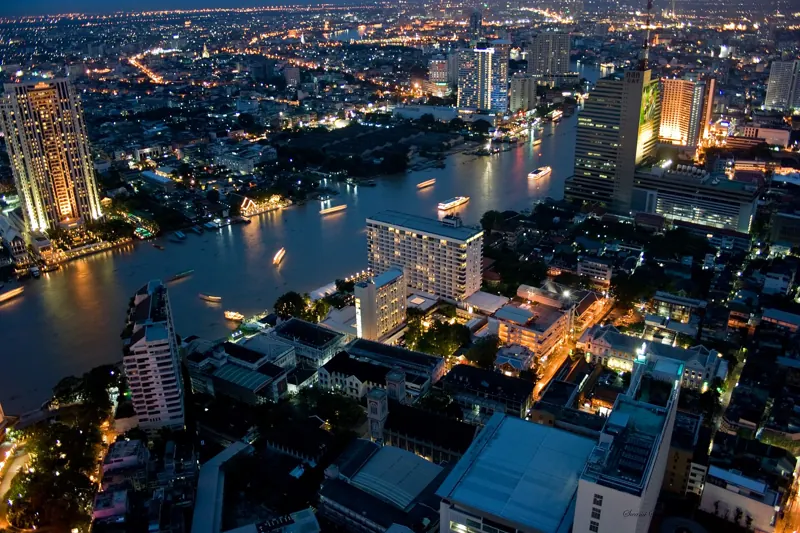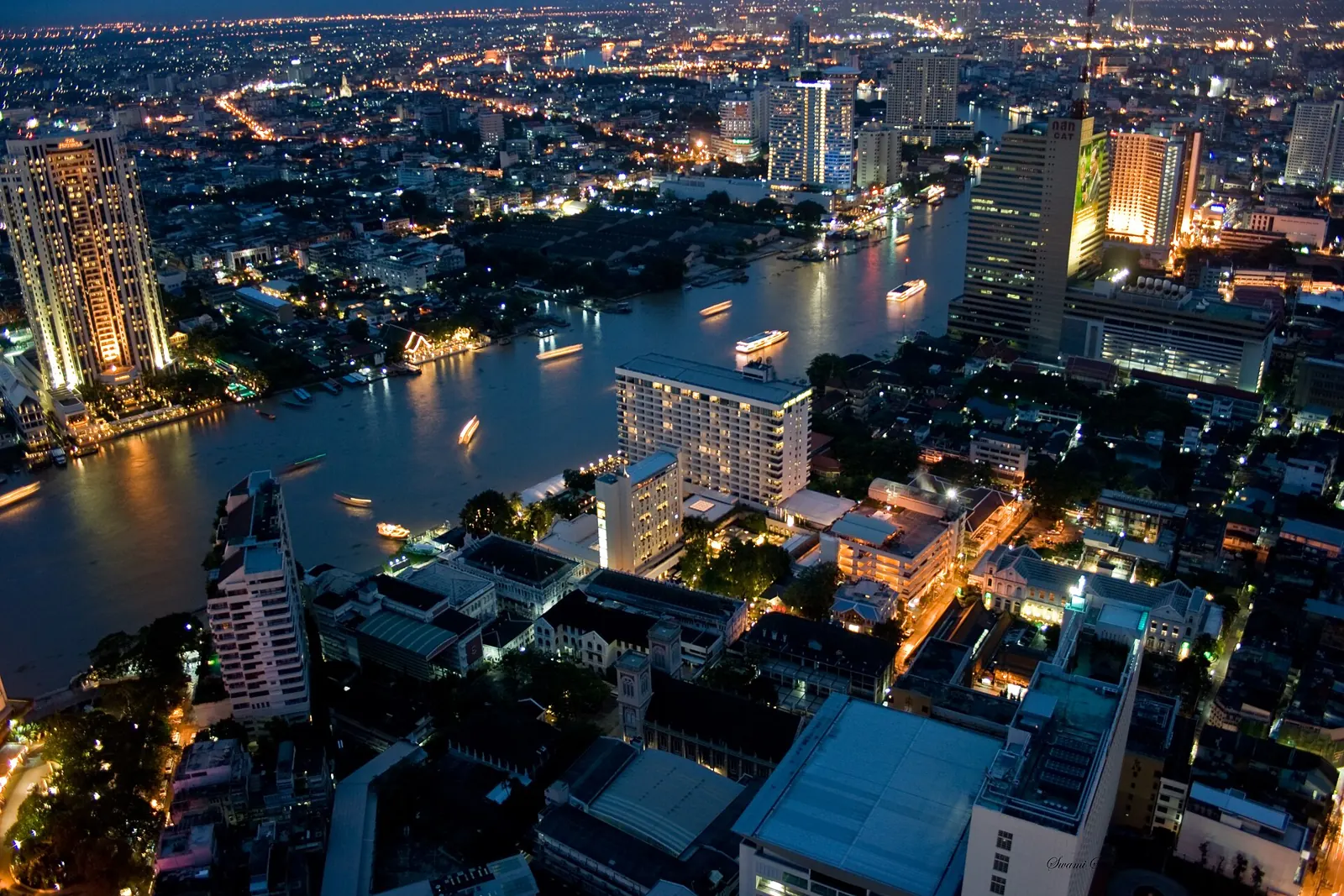
Thailand ranks among the top five retirement destinations for Americans, with an estimated 40,000 US expats calling it home full-time.
The country holds a Level 1 “Exercise Normal Precautions” advisory from the US State Department, the safest rating available.
Here’s what the safety picture looks like on the ground for retirees weighing this move in 2026.
Thailand Safety Overview for Americans in 2026
Is Thailand safe for American retirees in 2026? The short answer is yes, with common-sense precautions that apply to living anywhere abroad.
Global Safety Rankings and Crime Statistics
Thailand scores a 1.531 on the 2026 Global Peace Index, ranking 92nd out of 163 countries. Violent crime against foreign retirees remains rare. The vast majority of incidents involving Americans fall into petty theft and scam categories.
Expats living in residential communities experience different safety realities than backpackers in tourist zones. Long-term residents who learn local norms and build neighborhood relationships report feeling safer in Thailand than in many US cities.
How Thailand Compares to Other Retirement Destinations
| Factor | Thailand | Mexico | Costa Rica | Portugal |
|---|---|---|---|---|
| US State Dept Advisory | Level 1 | Level 2 | Level 1 | Level 1 |
| Violent Crime Risk (Expats) | Low | Moderate | Low-Moderate | Low |
| Healthcare Quality | High | Moderate-High | Moderate | High |
| Monthly Cost of Living | $1,500-$2,500 | $1,800-$3,000 | $2,000-$3,200 | $2,200-$3,500 |
| English Accessibility | Moderate | Moderate | Moderate | High |
Thailand’s combination of low violent crime, world-class healthcare, and affordable living makes it competitive with Portugal on safety while costing significantly less.
Common Safety Concerns for American Retirees in Thailand
Most safety risks in Thailand are predictable and avoidable. Retirees who understand the specific threat landscape navigate daily life without incident.
Petty Crime and Scams Targeting Foreigners
- Taxi and tuk-tuk overcharging: Use the Grab app for fixed-price rides. Insist on meters in Bangkok taxis
- Gem and jewelry scams: Anyone directing you to a “special government sale” is running a well-known con. Walk away
- Rental disputes: Always photograph property condition at move-in. Use written contracts with clear terms in English and Thai
- Romance scams: Online dating scams targeting older foreigners remain common. Never send money to someone you haven’t met in person repeatedly
- ATM skimming: Use ATMs inside bank branches during business hours. Cover the keypad when entering your PIN
Road Safety and Transportation Risks
Thailand reports roughly 20,000 road fatalities annually, placing it among the highest per-capita rates in Southeast Asia. Motorcycles account for the majority of deaths.
For retirees, the practical advice is straightforward. Avoid riding motorcycles. Use ride-hailing apps. If you drive, stick to familiar routes and avoid night driving on rural roads. Many expats find they never need to drive in cities with strong public transit like Bangkok or Chiang Mai.
Natural Disasters and Climate Risks
- Monsoon flooding (June-October): Affects low-lying areas in Bangkok and southern provinces. Choose housing above ground floor in flood-prone zones
- Extreme heat: March and April temperatures reach 40°C (104°F). Air conditioning is essential, not optional
- Earthquakes: Minor risk in northern Thailand near the Myanmar border. Chiang Mai occasionally feels tremors, but significant damage is extremely rare
- Tsunamis: Andaman coast (Phuket, Krabi) carries residual risk. Warning systems installed after 2004 provide early alerts
Political Stability in 2026
Thailand’s political environment has stabilized under its current civilian government. Protests, when they occur, concentrate in specific Bangkok intersections. Retirees living outside protest zones report zero disruption to daily routines.
The practical rule: avoid large political gatherings, follow US Embassy alerts, and maintain awareness of current events through local English-language media like the Bangkok Post.
Healthcare Safety and Access for US Retirees
Thailand’s medical system represents one of the strongest arguments for retiring here. Bangkok hospitals treat over 2.5 million international patients annually.
Quality of Thai Hospitals and Clinics
Bumrungrad International Hospital in Bangkok holds JCI accreditation and employs over 300 board-certified physicians trained in the US, UK, or Australia. Bangkok Hospital operates a network of facilities across the country with English-speaking staff.
Chiang Mai offers four JCI-accredited hospitals. Even mid-tier provincial hospitals provide competent care for routine medical needs.
Health Insurance Options for American Expats
| Insurance Type | Annual Premium (Age 65) | Coverage Level | Key Limitation |
|---|---|---|---|
| Thai Local Plan | $800-$1,500 | Basic inpatient | Limited outpatient |
| International Plan (Cigna Global) | $3,500-$6,000 | Comprehensive | Pre-existing condition waiting periods |
| International Plan (Aetna Intl) | $4,000-$7,000 | Premium | Age caps at 75-80 |
| Pay-as-you-go | $0 premiums | Self-funded | High exposure for catastrophic events |
Medicare does not cover healthcare outside the United States. This is the single most important insurance fact for retirees to understand. You need either international health insurance or sufficient savings to self-fund care.
Prescription Medication Access and Costs
Most common medications are available over the counter at Thai pharmacies for a fraction of US prices. A month’s supply of metformin costs around $3-5. Atorvastatin (generic Lipitor) runs about $8-12 monthly.
Controlled substances require a Thai prescription. Bring documentation from your US doctor, and a local physician will typically write an equivalent prescription after a brief consultation costing $15-30.
Safest Places in Thailand for American Retirees
Location choice shapes your entire safety experience. The four main expat hubs serve different retirement lifestyles.
Chiang Mai: The Expat Capital of the North
Chiang Mai hosts the largest concentration of American retirees in Thailand. The Nimmanhaemin and Santitham neighborhoods offer walkable streets, international restaurants, and active expat social scenes.
Monthly rent for a modern one-bedroom condominium runs 15,000-25,000 THB ($430-$720). Crime rates in expat neighborhoods remain among the lowest in the country. The American expat community organizes weekly meetups, volunteer groups, and holiday celebrations.
Air quality from February through April poses a health concern. Burning season creates haze that affects respiratory health. Many retirees travel south during these months.
Hua Hin: Quiet Coastal Retirement Haven
Hua Hin attracts retirees seeking beach proximity without Phuket’s tourist intensity. The Thai royal family maintains a palace here, ensuring strong police presence and well-maintained infrastructure.
The town offers three quality hospitals, international grocery stores, and a growing expat community. It sits 2.5 hours from Bangkok by car, providing easy access to the capital’s international airport and medical facilities.
Bangkok: Urban Convenience with Expat Infrastructure
Bangkok delivers the most comprehensive infrastructure for American retirees. Neighborhoods like Sukhumvit (particularly between Soi 20 and Soi 40), Silom, and Ari combine safety with walkability.
The BTS Skytrain and MRT subway eliminate driving entirely. World-class hospitals sit within 20 minutes of most expat neighborhoods. The trade-off: higher costs, traffic noise, and the intensity of a 10-million-person metropolis.
Phuket and the Islands: Tropical Living with Trade-offs
Island living offers stunning scenery with specific risks. Phuket provides the best island infrastructure, with an international airport and two major hospitals. Areas like Rawai and Chalong attract quieter, long-term residents.
Smaller islands like Koh Samui and Koh Phangan have limited medical facilities. Emergency evacuations to the mainland add risk for retirees with serious health conditions.
Visa and Legal Safety: Staying in Thailand Legally in 2026
Visa compliance protects you from fines, detention, and deportation. Thailand enforces immigration law more strictly than many retirees expect.
Non-Immigrant O-A (Long Stay) Visa Requirements
The retirement visa (Non-Immigrant O-A) remains the standard path for American retirees aged 50 and older.
- Deposit 800,000 THB (~$23,000) in a Thai bank account, maintained for the visa period
- Or demonstrate monthly income of 65,000 THB (~$1,870) from pensions, Social Security, or investments
- Provide a clean criminal background check from the FBI
- Carry health insurance with minimum 40,000 THB outpatient and 400,000 THB inpatient coverage
- Complete 90-day reporting at immigration (in-person or online) throughout your stay
Thailand Elite Visa and New LTR Visa Options
The Thailand Elite Visa offers 5, 10, or 20-year memberships starting at 600,000 THB ($17,200) for five years. It eliminates the 800,000 THB bank deposit requirement and includes airport fast-track services.
The Long-Term Resident (LTR) Visa targets wealthy retirees with $80,000+ annual income or $1 million in assets. Benefits include a 10-year visa, reduced 90-day reporting to annual, and a 17% flat tax rate on Thai-sourced income.
Financial Requirements and Proof of Funds
Do not let your bank balance dip below the required threshold. Immigration officers conduct random account checks. Retirees have lost visa extensions over temporary transfers that dropped their balance.
Overstaying carries penalties of 500 THB per day up to 20,000 THB, plus potential blacklisting from re-entry. Overstays exceeding 90 days result in 1-year re-entry bans. Beyond one year, the ban extends to 3-10 years.
Cost of Living and Financial Safety in Thailand 2026
Your money stretches further in Thailand, but financial planning requires understanding the specific mechanics of managing US dollars from abroad.
Monthly Budget Breakdown for American Retirees
| Category | Modest ($1,500/mo) | Comfortable ($2,500/mo) | Premium ($4,000+/mo) |
|---|---|---|---|
| Housing | $400-500 | $700-900 | $1,200-2,000 |
| Food | $300-400 | $500-700 | $800-1,000 |
| Healthcare/Insurance | $100-200 | $300-500 | $500-700 |
| Transportation | $50-100 | $100-200 | $200-400 |
| Utilities & Internet | $50-80 | $80-120 | $120-200 |
| Entertainment & Travel | $100-200 | $300-500 | $700-1,000 |
| Miscellaneous | $100-200 | $200-300 | $400-700 |
These figures assume living outside Bangkok. Add 20-30% for central Bangkok locations.
Banking and Money Management Tips
- Open a Bangkok Bank or Kasikorn Bank account with your passport and visa. Both offer English-language online banking
- Use Wise (formerly TransferWise) for USD-to-THB transfers. Exchange rates beat traditional wire transfers by 2-4%
- ATM withdrawals carry a 220 THB ($6.30) fee per transaction. Withdraw maximum amounts to reduce per-transaction costs
- Keep 3-6 months of expenses in your Thai account as a buffer against exchange rate fluctuations
Tax Considerations for US Expats in Thailand
US citizens must file federal tax returns regardless of where they live. The Foreign Earned Income Exclusion (FEIE) applies to earned income, not pensions or Social Security.
Thailand taxes income remitted into the country within the same calendar year it was earned. The US-Thailand tax treaty prevents double taxation on most income types. Consult a tax professional specializing in expat taxation before your move.
Social Security deposits directly into US bank accounts without interruption. The Social Security Administration does not reduce benefits for living in Thailand. Set up direct deposit before relocating.
Cultural Adjustment and Daily Life Safety Tips
Cultural missteps in Thailand rarely create physical danger. They do affect your relationships, reputation, and quality of life in your community.
Navigating Cultural Differences as an American
- Never criticize the Thai monarchy. Lèse-majesté laws carry prison sentences of 3-15 years per offense. This applies to social media posts
- Remove shoes before entering homes, temples, and many businesses
- Avoid touching anyone’s head or pointing your feet at people or Buddha images
- Public displays of anger damage your standing permanently. Thai culture values jai yen (cool heart) above directness
- Dress modestly at temples: covered shoulders and knees for both men and women
Language Barriers and Communication
Most retirees manage daily life with minimal Thai. Staff at hospitals, banks, and government offices in major cities speak functional English. Learn 50 essential Thai phrases for markets, taxis, and neighborhood interactions.
Translation apps like Google Translate handle Thai script recognition well. Point your camera at signs, menus, or documents for instant translation.
Building a Support Network
- Chiang Mai Expats Club: Weekly events, volunteer coordination, emergency support network
- Bangkok Americans: Social group with monthly dinners and cultural outings
- Thaivisa Forum and Facebook expat groups: Online communities for practical advice and local recommendations
- US Embassy Bangkok: Register with STEP (Smart Traveler Enrollment Program) for emergency notifications and evacuation assistance
The US Embassy maintains a list of English-speaking attorneys, medical providers, and translators. Save the American Citizen Services number in your phone: +66 2 205 4000.
FAQ
Do I need to speak Thai to retire safely in Thailand?
No. Major cities have sufficient English infrastructure for daily needs. Learning basic greetings and numbers improves your experience significantly and earns genuine respect from Thai neighbors.
Is tap water safe to drink in Thailand?
Tap water in Thailand is not safe for drinking. Use filtered or bottled water for drinking and brushing teeth. Most condominiums include water filtration systems. A 20-liter bottle delivered costs about $1.50.
How do I receive Social Security payments while living in Thailand?
Social Security deposits directly into your US bank account on schedule. Access funds through international transfers via Wise or your bank’s wire service. The SSA requires periodic proof-of-life verification, handled at the US Embassy.
What happens if I have a medical emergency in a rural area?
Thailand operates a 1669 emergency ambulance service nationwide. Response times in rural areas range from 15-45 minutes. Hospitals in provincial capitals provide stabilization before transfer to Bangkok or Chiang Mai if needed. Travel insurance with medical evacuation coverage is essential for rural residents.
Are there age limits on health insurance for retirees in Thailand?
Most international insurers cap new enrollment at age 74-80. Local Thai plans accept applications up to age 75 with higher premiums. Starting coverage before age 65 locks in lower rates and avoids pre-existing condition exclusions that become harder to navigate later.
Is it safe for solo American women to retire in Thailand?
Thailand ranks among the safer Asian destinations for solo women. Female retirees report feeling comfortable in major expat areas. Standard precautions apply: avoid isolated areas at night, use ride-hailing apps instead of street taxis, and connect with women’s expat groups for community support.
What should I do if I’m a victim of a crime in Thailand?
File a report at the nearest Tourist Police station (dial 1155). Tourist Police officers speak English and handle foreigner cases specifically. Contact the US Embassy’s American Citizen Services for assistance with lost passports, emergency funds, or legal referrals. Keep digital copies of your passport and visa in cloud storage.
How stable is the Thai baht against the US dollar?
The THB/USD rate has fluctuated between 33-37 THB per dollar over the past five years. Retirees managing currency risk keep expenses in a Thai baht account while holding reserves in USD. Transfer funds in larger batches when rates favor the dollar rather than making frequent small conversions.