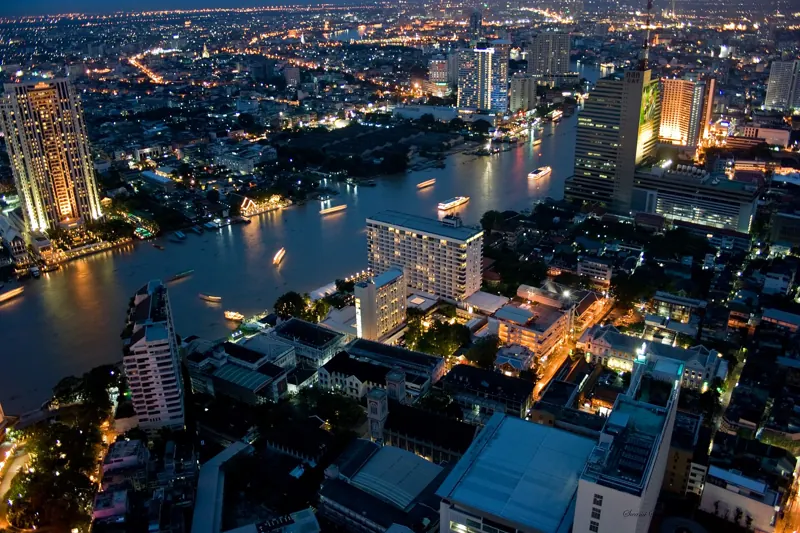
Healthcare in Thailand for retirees
Healthcare in Thailand for retirees means private hospitals such as Bumrungrad in Bangkok, Chiang Mai Ram and Bangkok Hospital Phuket; insurance is required only on the O-A and LTR visas.
The hospitals retirees use, what insurance does and does not cover. Checked against official and hospital sources on Oct 8, 2026.
- Life expectancy
- 76.6 years US 78.9. World Bank, 2024
- Doctors
- 0.5 per 1,000 US 3.7. World Bank, 2021
- Health spending
- $327/person Per year; US $13,473. World Bank, 2023
- Paid out of pocket
- 9.9% Of all health spending; US 10.9%. World Bank, 2023
Hospitals retirees use in Thailand
Bangkok
Bumrungrad International Hospital
- Asia's first hospital accredited by Joint Commission International (JCI), in 2002, and re-accredited every three years since
- About 1.1 million patients a year, over 620,000 of them international, from more than 190 countries
- Over 1,500 physicians and dentists
Bumrungrad. Checked Oct 8, 2026.
Chiang Mai
Chiang Mai Ram Hospital
- Accredited by Joint Commission International (JCI)
- Opened on 2 August 1993, founded by doctors from Chiang Mai and Ramkhamhaeng Hospital in Bangkok
Chiang Mai Ram. Checked Oct 8, 2026.
Phuket
Bangkok Hospital Phuket
- Accredited by Joint Commission International (JCI)
- Serves patients from Asia, Australia and Oceania, Europe, the Americas, the Middle East and Russia/CIS countries
Bangkok Hospital Phuket. Checked Oct 8, 2026.
Thailand's retirement extension does not ask for health insurance, so retirees on it pay their own medical bills or insure privately. Holders of the O-A long-stay visa must keep health insurance or non-Thai social welfare covering at least $100,000 or THB 3,000,000, bought in Thailand through the insurers' long-stay portal or abroad with an embassy certificate; if insurers refuse cover, a THB 3,000,000 bank deposit can replace it. LTR Wealthy Pensioners need cover of at least $50,000, or a $100,000 bank balance held 12 months. Private hospitals in Bangkok, Chiang Mai and Phuket hold JCI accreditation.
Paying for care in Thailand
9.9% of health spending in Thailand is paid directly by patients, close to the US share, so plan how you will pay before you move.
Retirees use either an international health plan, which can also cover care at home and in other countries, or a local plan from an insurer in Thailand, which costs less but covers care there only. Prices depend on age and on the insurer's terms for existing conditions; compare written quotes.
If you are on Medicare
Medicare usually does not pay for care outside the United States; the exceptions are narrow, such as a foreign hospital closer to your US home than the nearest US hospital.
Medicare.gov. Checked Oct 7, 2026.
Healthcare questions
Does Medicare cover me in Thailand?
Medicare usually does not pay for care outside the United States; the exceptions are narrow, such as a foreign hospital closer to your US home than the nearest US hospital. Plan on private insurance or paying directly for care in Thailand.
Do I need health insurance for the Retirement O visa?
No, for the Non-Immigrant O retirement extension. Yes on the O-A long-stay visa: health insurance or non-Thai social welfare covering at least $100,000 or THB 3,000,000 for the whole stay, and on the LTR Wealthy Pensioner visa: at least $50,000 of cover.
How much of the bill do people pay themselves?
In Thailand, 9.9% of all health spending is paid out of pocket, against 10.9% in the US (World Bank, 2023).
What is healthcare like in Thailand for retirees?
Retirees mostly use private hospitals such as Bumrungrad in Bangkok, Asia's first JCI-accredited hospital, Chiang Mai Ram in Chiang Mai and Bangkok Hospital Phuket, all accredited by Joint Commission International.
Do I need health insurance to retire in Thailand?
Not on the Non-Immigrant O retirement extension. The O-A long-stay visa requires cover of at least $100,000 or THB 3,000,000, and the LTR Wealthy Pensioner visa at least $50,000.