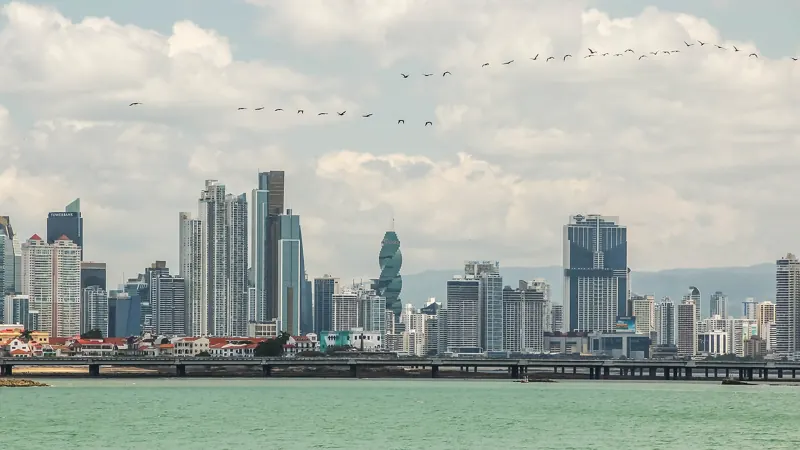
Panama grants Americans the same fee-simple property rights as its own citizens, with no local partner required and no currency risk thanks to dollarization since 1904.
A $200,000 purchase unlocks the Friendly Nations Visa, while $300,000 triggers immediate permanent residency through October 2026.
This guide walks you through the legal process, regional pricing, taxes, financing, and the pitfalls that have cost foreign buyers entire investments.
Why Americans Buy Property in Panama in 2026
Panama combines U.S. dollar stability, three-hour flights to Miami, and a territorial tax system that ignores your Social Security and pension income entirely. No other Latin American market stacks these advantages so cleanly for retirees.
Buying property panama american guide readers consistently rank four drivers as decisive:
- Currency: USD legal tender since 1904, no exchange exposure on rent, sales, or savings
- Travel: 3-hour direct flights from Miami on American, Copa, and United
- Residency: $200K unlocks Friendly Nations, $300K unlocks immediate permanent residency
- Taxes: Foreign-sourced income (Social Security, IRAs, US dividends) entirely exempt locally
Dollarized Economy and Currency Stability
The Balboa pegs 1:1 to the USD, and dollars circulate as everyday cash. Your $400,000 condo stays a $400,000 condo regardless of what happens to peso markets next door.
Proximity to the US and Direct Flights
Tocumen International runs daily nonstops to Miami, Houston, Newark, and Atlanta. Panama sits within one hour of US Eastern Time year-round, so family calls and remote work feel domestic.
Pensionado and Friendly Nations Visa Pathways
The Pensionado Visa demands only $1,000/month in lifetime pension income, dropping to $750/month if you own Panamanian real estate worth $100,000+. Social Security qualifies directly, and approval brings 20% off medical bills, 50% off entertainment, and 30% off transit fares.
Tax Advantages for Property Owners
Panama’s territorial system taxes only income earned inside Panama. Primary residences under $120,000 pay zero property tax annually, with rates capped at 0.5% up to $700,000 and 0.7% above that, per Golden Harbors’ 2026 Panama tax review.
Can Americans Legally Own Property in Panama?
Yes, US citizens hold the same fee-simple ownership rights as Panamanians on titled property anywhere outside a narrow 10-kilometer border buffer. No residency, no permits, no local partner required.
Fee Simple Ownership Rights
Fee simple means perpetual ownership registered under your own name in the National Public Registry, with full rights to sell, mortgage, lease, and inherit. The property receives a unique finca number that anyone can verify.
Restricted Zones (Within 10km of Borders)
Foreigners cannot own titled land within 10 kilometers of the Costa Rica or Colombia borders. This affects slivers of Chiriquí, Bocas del Toro, and Darién, but Panama City, Boquete, Coronado, and Pedasí sit comfortably outside the zone.
Titled vs. ROP (Rights of Possession) Property
| Feature | Titled Property | Rights of Possession (ROP) |
|---|---|---|
| Public Registry | Registered with finca number | Not registered |
| Mortgage eligible | Yes | No |
| Annual property tax | Standard rates apply | Zero |
| Resale to foreigners | Strong | Limited |
| Squatter/competing claim risk | Low | High |
Always buy titled property unless you fully understand ROP risk and price the discount accordingly.
Holding Property Through a Panamanian Corporation
A Sociedad Anónima (S.A.) avoids probate and shields personal assets, costing $1,000–$2,500 to form and $300–$500 annually to maintain. American shareholders trigger IRS Form 5471 filing every year regardless of corporation value, a critical caveat detailed by Living In Panama.
Step-by-Step Process: Buying Property in Panama as an American
The full transaction runs 30 to 90 days from accepted offer to registered title, with six discrete steps. Physical presence at closing is optional if you grant power of attorney.
Step 1: Define Budget and Goals
Decide between primary residence, rental investment, or visa-qualifying purchase. Each carries different tax exemption thresholds and minimum investment levels.
Step 2: Hire an Independent Real Estate Attorney
This is the single most important decision in the entire transaction. Hire an attorney with zero affiliation to the seller, listing broker, or developer. Their loyalty must run only to you.
Step 3: Find a Licensed Realtor
Browse Encuentra24 and Compreoalquile for listings, then verify any agent’s ACOBIR license number. Commissions of 3 to 5% are paid by the seller, not you.
Step 4: Make an Offer and Sign Promise of Sale
The Promesa de Compraventa is a binding preliminary contract with a standard 10% earnest money deposit held in escrow by your attorney. The promesa is registered as a lien against the property, protecting you during due diligence.
Step 5: Title Search and Due Diligence
Your attorney pulls the Public Registry record on the finca number, confirms zero liens, verifies paid property taxes, validates the seller’s legal authority, and screens for ROP claims. Never wire funds before this step completes.
Step 6: Closing and Public Deed Registration
Both parties sign the Escritura Pública at a notary, the deed is inscribed in the Public Registry, and ownership transfers. Buyer closing costs run 4–6% total, including approximately $6,000 in notary and registry fees on a $400,000 property, per The Independent Lawyer.
Best Locations to Buy Property in Panama for Americans
Panama splits into five distinct buyer markets, with Panama City driving urban demand and Pedasí leading appreciation. Each region trades price against lifestyle in predictable ways.
| Region | Entry Price | Lifestyle | Best For |
|---|---|---|---|
| Panama City | $150K–$1M+ | Urban, dollarized | Investors, working expats |
| Coronado | $200K–$450K | Beach, English-language | Active retirees |
| Boquete | $100K–$350K | Mountain, cool climate | Budget retirees |
| Bocas del Toro | $80K–$400K | Caribbean, mostly ROP | Adventurous buyers |
| Pedasí | $180K–$300K | Emerging beach, growth | Appreciation seekers |
Panama City: Punta Pacifica, San Francisco, and Costa del Este
Citywide asking prices average $1,900/sqm in 2026, with the three foreigner-favorite neighborhoods commanding $2,700–$5,500/sqm. Costa del Este has appreciated 40–60% over the past decade; San Francisco/Casco Antiguo has run 50–80% thanks to UNESCO heritage status.
Coronado and the Pacific Coast
Coronado sits 80 km west of Panama City, roughly 80 minutes by highway, and remains the most established expat beach community with English-speaking doctors, supermarkets, and golf. Ocean-view condos run $220,000–$450,000.
Boquete: Highland Living for Retirees
At 1,200 meters elevation in Chiriquí, Boquete delivers spring-like weather year-round and Panama’s largest English-speaking retiree community outside the capital. Entry homes cost $100,000–$250,000, and David’s full hospital network sits 40 minutes away.
Bocas del Toro: Caribbean Beachfront
Caribbean beauty comes with a serious legal warning: the majority of Bocas properties sell under ROP, meaning the government holds technical title. Titled property exists but is scarce due to maritime restrictions, as documented by Living in Bocas del Toro.
Pedasi and the Azuero Peninsula
Pedasí is the standout growth story: beachfront lots appreciated 8–12% annually over five years, Playa Venao rose 45% since 2020, and residential lot sales jumped 60% year-over-year in 2025. A 150 sqm beachfront villa lists at $180,000–$300,000.
Panama Real Estate Costs and Market Trends in 2026
Panama City entry condos start at $150,000 while luxury Punta Pacífica towers clear $1M, and 2026 forecasts show modest 2–10% regional appreciation. Beachfront markets outpace urban gains.
| Cost Category | Buyer Share | Seller Share |
|---|---|---|
| Transfer tax (2%) | $0 | $8,000 on $400K |
| Capital gains | $0 | 3% gross or 10% net |
| Legal fees (1–1.5%) | $4,000–$6,000 | $4,000–$6,000 |
| Agent commission (5%) | $0 | $20,000 on $400K |
| Notary + registry | ~$6,000 on $400K | minimal |
| Total range | 2–7% | 7–12% |
Average Property Prices by Region
- Panama City entry condos: $150,000–$220,000 (San Francisco, Bella Vista)
- Panama City mid-range: $220,000–$450,000 (Costa del Este, Santa María)
- Panama City luxury: $600,000–$1M+ (Punta Pacífica, Avenida Balboa)
- Suburban single-family: $280,000–$600,000 (Clayton, Costa Sur)
- Boquete mountain homes: $150,000–$350,000
Closing Costs and Transaction Fees
Buyer-side closing runs 4–6% for cash and 3–7% when financed. As of January 1, 2026, Law 468 eliminated the historic transfer tax exemption on first sales of new residential units, so new-build buyers now owe the full 2%.
Annual Holding Costs
HOA fees run $0.80–$3.50 per square meter per month, translating to $1,000–$4,200/year for a 100 sqm condo. Home insurance adds $500–$1,500/year, and a $250,000 primary residence owes roughly $650/year in property tax.
2026 Market Forecast
Panama City condos project +2–4% at entry and +4–6% at luxury, while coastal markets target +5–10%. Metro Line 3 (2028 completion) and the Fourth Bridge are expected to drive 10–20% corridor appreciation, per Panama Realty Zone’s 2026 forecast.
Financing Options: Can Americans Get a Mortgage in Panama?
Americans can borrow locally, but most pay cash because Panama bank rates run 1–3 points higher than US rates with 30–50% down required. HELOCs on US property frequently win the math.
Local Bank Financing for Foreigners
The most foreigner-accessible lenders in 2026 are Banistmo, Global Bank, and Bi Bank, with Banco General the largest but strictest. Davivienda absorbed Scotiabank Panama in December 2025, adding some institutional turbulence.
Down Payment Requirements (30–40%)
Banks lend a maximum 50–70% LTV to non-residents, requiring 30–50% down. Some lenders demand a full 50% from non-resident foreigners. Loan terms run 10–20 years, and the loan must mature before your 75th birthday.
Interest Rates and Loan Terms in 2026
Panama’s SBP reference rate sits at 6.50% as of Q1 2026, but foreign borrowers pay effective rates of 7–9% including the 1% FECI tax on non-primary residences. US 30-year fixed averaged 5.99% in February 2026, per Plan B Expat’s 2026 mortgage guide.
Cash Purchases vs. US-Based Financing Strategies
- Cash from liquidated US assets: simplest, no documentation drag
- US HELOC: 5.37–5.99%, undercuts Panama bank rates by 1–3.5 points
- Self-directed IRA: tax-advantaged for investment property
- Developer financing: 7–8%, 30% down, 3–5 year bridge terms
One quiet upside: Panama mortgages do not report to US credit bureaus, preserving your domestic borrowing capacity.
Residency Through Real Estate Investment in Panama
Three visa programs link to property purchases, with the Qualified Investor Visa delivering immediate permanent residency at $300,000 through October 2026. After that date, the threshold jumps to $500,000 permanently.
| Visa | Minimum Investment | Residency Type | Citizenship Timeline |
|---|---|---|---|
| Qualified Investor | $300K real estate | Permanent (immediate) | 5 years |
| Friendly Nations | $200K real estate or deposit | 2-yr provisional then permanent | 5 years post-permanent |
| Pensionado | $0 ($1,000/mo pension) | Permanent | General framework |
Qualified Investor Visa ($300,000 Property Minimum)
The QIV grants immediate permanent residency, not temporary status, with the investment held for five years. Government and legal fees total approximately $16,000 for the main applicant; processing takes 30–45 business days.
Friendly Nations Visa Requirements
Restructured in 2021, the program covers 50 countries including the US and now requires demonstrated economic ties via $200K real estate, $200K bank deposit (held 3 years), or local employment. You receive 2-year provisional residency, then permanent.
Pensionado Visa for Retirees
Only $1,000/month in lifetime pension income required, or $750/month with $100,000+ in Panamanian real estate. US Social Security qualifies directly, confirmed by Global Citizen Solutions’ Pensionado guide. Each dependent adds $250/month.
Path to Panamanian Citizenship
Five years of continuous permanent residency unlocks naturalization eligibility, with Spanish proficiency and demonstrated knowledge of Panamanian history required. Re-entry to Panama once every two years preserves Pensionado status.
Taxes for American Property Owners in Panama
Americans owe two parallel tax systems: Panama property and capital gains taxes locally, plus full US worldwide reporting on FBAR, FATCA, and Schedule E. No US-Panama treaty exists, so foreign tax credits via Form 1116 are your defense against double taxation.
Panama Property Tax and Exemptions
Primary residence rates in 2026: – $0–$120,000: exempt – $120,001–$700,000: 0.5% – Above $700,000: 0.7%
Investment/secondary property rates: – $0–$30,000: exempt – $30,001–$250,000: 0.6% – $250,001–$500,000: 0.8% – Above $500,000: 1.0%
A 10% discount applies when paying the full annual bill upfront. Bills come due April 30, August 31, and December 31.
US Tax Obligations (FBAR, FATCA, Form 8938)
- FBAR (FinCEN 114): required if aggregate foreign accounts exceed $10,000 at any point
- Form 8938: foreign financial assets above $200,000 end-of-year ($300K at any point) for single filers; doubled for joint
- Form 5471: required annually for S.A. ownership above 10%, with penalties starting at $10,000/year
Capital Gains Tax in Panama
Sellers choose between paying 10% on net gain or 3% of gross sale price as a definitive final tax, whichever is lower. A separate 2% transfer tax also applies, detailed by Kraemer & Kraemer.
Rental Income Taxation
Rental income runs progressive: 0% up to $11,000, 15% on $11,001–$50,000, 25% above $50,000. Effective rates after deductions for repairs, management, and depreciation typically land at 5–15% of gross rent.
Common Pitfalls and Red Flags to Avoid
Americans have lost six and seven-figure investments through Rights of Possession disputes, vanishing pre-construction deposits, and Gringo Pricing markups. Every loss traces back to skipping the Public Registry check.
ROP Land Disputes
The US State Department warns that most land outside Panama City is not titled. ROP claims face challenges in a court system ranked 73rd of 143 countries on rule-of-law indexes, where disputes routinely run a decade.
Title Insurance Considerations
Title insurance is not standard in Panama. Neither First American nor Stewart Title maintains a confirmed consumer retail presence in the Republic, so your independent attorney is the primary safeguard, verified through Stewart Title’s international services listing.
Pre-Construction Risks
Red flags for off-plan developments:
- Developer cannot prove legal ownership of the land
- Lots marketed before formal subdivision from a master title
- Large upfront payments without escrow protection
- Missing environmental or construction permits (critical on coast)
- Fewer than two fully delivered prior projects
Never wire pre-construction deposits to anything other than an escrow account controlled by an independent attorney.
Avoiding Overpriced ‘Gringo Pricing’
Panama City resale condos sell at a 5–8% discount to asking price, with a 92–95% sale-to-ask ratio overall. View at least 10 comparable properties across multiple brokers, and use a bilingual local scout rather than negotiating as an obvious foreigner.
Setting Up Banking and Utilities After Purchase
FATCA forces Panamanian banks to report American account holders to the IRS, narrowing your bank options but not eliminating them. Utilities run through monopolies, so processes are predictable once you have a deed.
Opening a Panamanian Bank Account
Most foreigner-friendly options for Americans in 2026:
- Banistmo: $500 minimum, most foreigner-friendly underwriting
- Banco General: $50 minimum, largest branch network
- Davivienda: English-speaking staff
- BAC Credomatic, Global Bank, Multibank: $50 minimum
Documents must be notarized, translated to Spanish, and dated within three months. In-person approval runs days to two weeks; remote applications stretch two to six weeks.
Money Transfer Services (Wise, OFX)
Wise and OFX cost roughly 50% less than traditional bank wires (which average $50), and OFX offers dedicated support for large property closings. Wires sent before noon typically clear same-day in Panama.
Setting Up Utilities and Internet
| Service | Provider | Setup Time | Monthly Cost |
|---|---|---|---|
| Electricity | Union Fenosa (monopoly) | 1–2 weeks | varies |
| Water | IDAAN (government) | 1–2 weeks | low |
| Gas | Panagas or Tropigas | 2–5 days | varies |
| Internet 100–200 Mbps | Tigo, Más Móvil, Claro | days | $30–$45 |
| Internet 300–600 Mbps fiber | Tigo, Más Móvil, Claro | days | $45–$70 |
Bring your title deed and passport to every utility appointment.
Property Management for Absentee Owners
Firms like House Hunters Panama charge 10–12% of rental income and handle tenant screening, rent collection, and maintenance. Non-residents legally earn rental income regardless of visa status, per Panacrypto’s rental law overview.
FAQ
Do I need to be in Panama physically to close on a property?
No. You grant power of attorney to your independent Panamanian attorney, who signs the Escritura Pública at the notary on your behalf. Most Americans handle scouting and offer-stage in person, then close remotely.
Is title insurance available in Panama?
Title insurance is not standard practice in Panama, and neither First American nor Stewart Title maintains confirmed consumer-facing operations there. Your independent attorney’s title search through the Public Registry is the primary legal protection for the transaction.
Does buying a $300,000 property still qualify me for permanent residency in 2026?
Yes, through October 15, 2026, the Qualified Investor Visa accepts a $300,000 real estate investment for immediate permanent residency. After that date, the minimum permanently rises to $500,000, so applications filed earlier preserve the lower threshold.
How much should I budget for total closing costs as a buyer?
Plan for 4–6% of the purchase price for cash buyers, or 3–7% if financing through a Panama bank. This includes notary fees, Public Registry inscription, legal fees of 1–1.5%, and bank transfer charges of 0.25–1%.
Can I get a US-style 30-year mortgage in Panama?
No. Foreign borrowers receive 10–20 year terms with the loan required to mature before your 75th birthday. Rates run 7–9% including FECI tax, so most Americans use cash or a US HELOC at 5.37–5.99% instead.
What’s the single biggest mistake American buyers make in Panama?
Buying Rights of Possession (ROP) land while believing it is titled property. ROP cannot be registered, mortgaged, or easily resold, and the U.S. State Department warns most land outside Panama City is not formally titled. Always verify the finca number through the Public Registry.
Will I pay US taxes on rental income from my Panama property?
Yes. All Panama-sourced rental income reports on Schedule E of your US federal return. You owe Panama tax progressively (effective 5–15% after deductions), then claim a foreign tax credit on IRS Form 1116 to avoid double taxation since no US-Panama treaty exists.
How long does the full purchase process take?
The standard timeline runs 30–90 days from accepted offer to completed Public Registry inscription. Title-clear urban condos close fastest; rural properties, ROP-adjacent land, or complex corporate structures push toward the 90-day end.