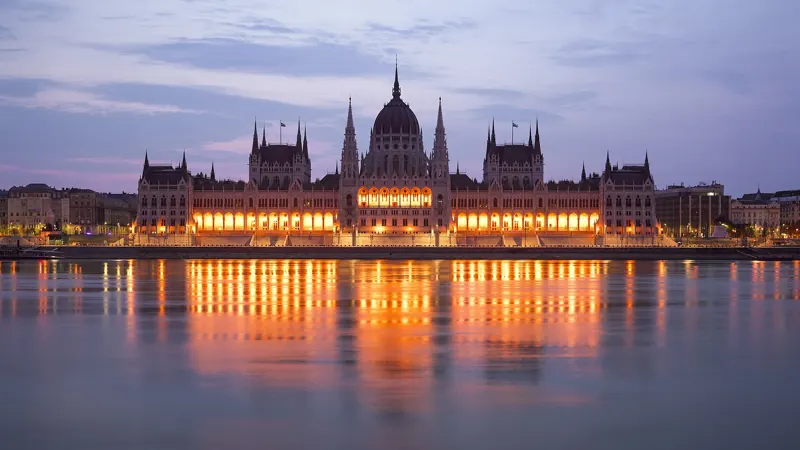
You have been eyeing Eastern Europe, and now the decision narrows to two cities. Budapest vs Prague for retirement is the choice that divides budget-conscious expats across every online forum.
A comfortable retirement in Budapest costs $1,800 per month. Prague runs closer to $2,200 per month. Both cities sit inside the EU and Schengen zone, giving you access to 27 countries without a single border check.
This guide compares costs, visas, healthcare, taxes, safety, and lifestyle across 12 categories. You will leave with a clear answer for your budget and priorities.
Quick Verdict: Budapest vs Prague at a Glance
Both cities rank among the best retirement destinations in Europe. Your winner depends on whether you prioritize savings or polish.
| Category | Budapest | Prague | Winner |
|---|---|---|---|
| Monthly budget | $1,600–$1,800 | $2,000–$2,200 | Budapest |
| Residence permit | National visa + permit | Long-term visa | Budapest |
| Healthcare quality | Excellent private | Excellent private | Tie |
| Safety | Good | Excellent | Prague |
| Climate | Hot summers, cold winters | Mild summers, cold winters | Tie |
| Expat community | Growing fast | Large, established | Prague |
| Food costs | $4–$7 per meal | $5–$9 per meal | Budapest |
| Public transit | Metro + tram ($22/mo) | Metro + tram ($23/mo) | Tie |
| Signature culture | Thermal baths, ruin bars | Old Town, beer halls | Preference |
| Tax burden | 15% flat tax | 15%/23% progressive | Budapest |
Cost of Living: Budapest vs Prague Monthly Budget
According to Numbeo’s cost of living comparison, Budapest costs 20% to 25% less than Prague across housing, food, and transportation. A single retiree can live well in Budapest on $1,800 per month. Prague requires closer to $2,200.
Here is what a typical monthly budget looks like in each city:
| Expense | Budapest | Prague |
|---|---|---|
| Rent (1-bed, furnished) | $500–$700 | $700–$950 |
| Utilities | $80–$120 | $100–$150 |
| Groceries | $250–$350 | $300–$400 |
| Dining out (15 meals) | $80–$120 | $100–$150 |
| Transportation | $25–$40 | $25–$45 |
| Health insurance | $150–$250 | $200–$300 |
| Entertainment | $100–$150 | $120–$160 |
| Phone + Internet | $25–$35 | $30–$40 |
| Total | $1,210–$1,765 | $1,575–$2,195 |
The Budapest advantage shows strongest in dining and housing. A hearty Hungarian lunch with soup and a main course costs $5 to $7 at a local restaurant. A comparable Czech meal runs $7 to $10.
Housing tells a similar story. A modern one-bedroom apartment in Budapest’s District V or VII rents for $550 to $700 per month. A comparable flat in Prague’s Vinohrady or Zizkov costs $750 to $950.
Western groceries close the gap between the two cities. Imported items like olive oil, specialty cheese, and wine cost similar amounts in both capitals. If you eat local, Budapest wins. If you shop at international stores, the difference narrows.
Use our geographic arbitrage calculator to model your specific spending against both cities.
Residence Permits: Hungary vs Czech Republic for Retirees
Neither country offers a dedicated retirement visa. Both require you to apply for a general residence permit and prove financial self-sufficiency. Hungary vs Czech Republic retirement visa paths each have trade-offs worth understanding.
| Requirement | Hungary Residence Permit | Czech Long-Term Visa |
|---|---|---|
| Age minimum | None | None |
| Income requirement | Proof of sufficient funds | Proof of sufficient funds |
| Bank statements | 3 months required | 3 months required |
| Health insurance | Required (private) | Required (min EUR 30,000 coverage) |
| Validity | 1–2 years, renewable | 1 year, renewable |
| Path to permanent residency | After 5 years | After 5 years |
| Application fee | ~$120 | ~$100 (CZK 2,500) |
| EU/Schengen access | Yes | Yes |
Hungary residence permit key details:
- No age restriction for applicants
- Proof of accommodation in Hungary required at application
- Private health insurance covering your entire stay
- Clean criminal record from home country, apostilled
- Apply at the Hungarian embassy in your home country or at the immigration office in Budapest
Hungary also offers a Golden Visa program for those willing to invest a minimum of EUR 250,000. This grants a 10-year residence permit with no minimum stay requirement.
Czech long-term visa key details:
- No age restriction for applicants
- Bank statements for 3 months to prove financial stability
- Travel medical insurance with minimum EUR 30,000 coverage
- In-person interview at the Czech embassy required
- Application processing takes 60 to 90 days on average
Both countries grant permanent residency after 5 years of continuous legal residence. Hungary’s process is slightly more straightforward for retirees because the financial threshold is less rigidly defined.
Verify current requirements with the Hungarian embassy or Czech consulate before applying. Rules change frequently.
Healthcare: Budapest vs Prague Hospitals and Insurance
Both cities offer high-quality medical care at a fraction of US costs. Prague has a slight edge in international accreditation. Budapest’s private sector has expanded rapidly to serve a growing expat population.
Budapest hospitals and clinics:
- FirstMed Budapest provides English-speaking primary care and specialist services designed for expats and international patients
- Dr. Rose Hospital is a full-service private hospital with modern facilities and multilingual staff
- Routine checkup costs run $40 to $80 without insurance
- Specialist consultations cost $50 to $100
Prague hospitals and clinics:
- Canadian Medical operates 7 clinics and is the facility of choice for English-speaking foreigners in Prague
- Hospital Na Homolce is one of the most expat-friendly hospitals in the Czech Republic with specialized international patient services
- Routine checkup costs run $35 to $70 without insurance
- Specialist consultations cost $40 to $90
| Insurance Type | Budapest | Prague |
|---|---|---|
| Local private plan | $1,800–$3,000/year | $2,400–$3,600/year |
| International plan (comprehensive) | $3,500–$6,000/year | $4,000–$6,500/year |
| Out-of-pocket dental cleaning | $30–$50 | $40–$60 |
| Out-of-pocket MRI | $200–$400 | $250–$450 |
Hungary is known for dental tourism. A crown that costs $1,200 in the US runs $250 to $400 in Budapest.
Prague’s healthcare system ranks among the best in the EU. Read our guide on healthcare in Europe for American retirees for insurance strategies.
Safety and Security: Budapest vs Prague for Retirees
Prague ranks slightly ahead of Budapest on safety metrics, but both cities are far safer than most American cities of comparable size. Either one lets you walk comfortably at night without the vigilance required in US urban areas.
According to Numbeo’s crime index for Prague, the city scores 24.4 on the crime index with a safety index of 75.6. Budapest scores 33.9 on the crime index with a safety index of 76.9. Both are well below New York (51.0) and Los Angeles (54.1).
Budapest safety considerations:
- District V (Belvaros), District VI, and District II (Buda) are the safest neighborhoods for retirees
- Petty pickpocketing occurs in tourist areas around the Parliament and Central Market Hall
- Public transit is safe at all hours, though stay alert on crowded trams
- Scam restaurants near tourist spots may overcharge, so stick to locally recommended places
Prague safety considerations:
- Vinohrady, Zizkov, and Karlin are safe, walkable neighborhoods popular with expats
- Old Town Square and Wenceslas Square attract pickpockets targeting tourists
- Prague ranks among Europe’s safest cities for travelers according to multiple international rankings
- Taxi scams have decreased with the rise of Bolt and Uber, but always use apps
Both cities are safe enough for daily retirement life. Prague has a marginal edge in overall crime statistics. Budapest requires slightly more awareness in tourist-heavy zones. See our safest countries for American retirees ranking for broader context.
Climate and Weather: Budapest vs Prague Year-Round
Both cities share a Central European continental climate with four distinct seasons. Budapest runs warmer in summer due to its lower elevation and thermal geography. Winters in both cities are cold but manageable.
| Season | Budapest Temp | Budapest Rain | Prague Temp | Prague Rain |
|---|---|---|---|---|
| Jan–Mar | 28–52°F | Low | 25–48°F | Low |
| Apr–Jun | 50–80°F | Moderate | 45–75°F | Moderate |
| Jul–Sep | 60–88°F | Moderate | 55–80°F | Moderate |
| Oct–Dec | 32–58°F | Low | 30–52°F | Low |
Budapest summers reach the high 80s and occasionally 90°F. The city’s thermal springs and outdoor pools make the heat enjoyable rather than oppressive. Winters drop to the mid-20s with occasional snow.
Prague summers peak in the mid to upper 70s, making it one of the more comfortable European capitals in July and August. Winters are similar to Budapest with temperatures hovering around freezing from December through February.
Neither city has a “bad season” that forces expats to leave. If you prefer warmer summers and thermal bath culture, Budapest has the advantage. If you want milder summers, Prague is your pick. Compare these climates to our best climates for retirement abroad guide.
Lifestyle and Culture: Budapest Ruin Bars vs Prague Old Town
Budapest and Prague each deliver a unique cultural experience. Your preference here may be the deciding factor since the financial differences alone do not make this an obvious choice.
Budapest lifestyle highlights:
- Thermal bath culture defines daily life. The Szechenyi Thermal Bath is Europe’s largest medicinal bath complex with 18 pools. Regular weekday visits cost $12 to $15 and become a social ritual for locals and expats alike
- Ruin bars in the Jewish Quarter offer a vibrant nightlife scene. Szimpla Kert, the original ruin bar, occupies an abandoned stove factory and hosts live music, art exhibitions, and a Sunday farmers market
- The Danube splits the city into Buda and Pest, creating dramatic river views from dozens of vantage points
- Hungarian wine regions like Tokaj and Eger are 2 to 3 hours away, offering world-class wine at $3 to $8 per bottle
Prague lifestyle highlights:
- Beer culture runs deep. The Czech Republic has the highest per-capita beer consumption in the world. A half-liter of excellent Czech lager costs $1.50 to $2.50 at a neighborhood pub
- Prague’s Old Town is a UNESCO World Heritage Site with 600 years of preserved architecture. Walking these streets never gets old, even after years of residence
- Classical music and opera are affordable cultural staples. Tickets to the National Theatre or Czech Philharmonic start at $10 to $20
- Bohemian countryside day trips reach castles, spa towns like Karlovy Vary, and nature reserves within 1 to 2 hours
Budapest feels grittier and more spontaneous. Prague feels more polished and architecturally refined. Compare the Eastern European experience with our Portugal vs Spain retirement analysis for a Western European perspective.
Expat Community: Budapest vs Prague Social Scene
Prague has the larger and more established English-speaking expat community. Budapest’s community is smaller but growing fast, especially among digital nomads and early retirees.
Prague expat resources:
- Expats.cz is the main English-language portal for Czech Republic expat news, events, and classifieds
- Facebook groups including “Expats in Prague” and “Prague Digital Nomads” host tens of thousands of active members
- Vinohrady and Karlin are the main expat neighborhoods with English-friendly cafes, shops, and coworking spaces
- InterNations Prague organizes monthly meetups and professional networking events
Budapest expat resources:
- Budapest Expat Network and “Expats in Budapest” Facebook groups provide daily advice and event listings
- District VII (Jewish Quarter) and District V are the most popular expat neighborhoods
- Coworking spaces like Kaptar, Mosaik, and Impact Hub host community events alongside workspace
- Language exchange meetups happen multiple times per week and double as social events
Prague’s expat community benefits from decades of post-1989 growth. English is widely spoken in shops, restaurants, and service businesses. Budapest requires more Hungarian for daily errands, though English proficiency is improving among younger Hungarians.
Both cities offer enough social infrastructure to build a full social life within your first two months.
Public Transportation: Budapest vs Prague Getting Around
Both cities have world-class public transit systems that eliminate the need for a car. This is a significant lifestyle advantage over most American cities and even over many popular retirement destinations in Southeast Asia or Latin America.
| Feature | Budapest | Prague |
|---|---|---|
| Metro lines | 4 lines | 3 lines |
| Tram network | 30+ routes | 20+ routes |
| Monthly pass | HUF 8,950 (~$22) | CZK 550 (~$23) |
| Night service | Night buses + trams | Night trams + buses |
| Airport connection | Bus + metro (40 min) | Bus + metro (45 min) |
| Rideshare (Bolt/Uber) | Available | Available |
Budapest’s tram line 2 runs along the Danube and is considered one of the most scenic urban transit routes in the world. The metro system covers the city efficiently, and trams fill the gaps.
Prague’s tram network is the backbone of daily transit. The system runs like clockwork, with trams arriving every 5 to 10 minutes during the day. The metro connects major hubs quickly.
Both cities charge approximately $22 to $23 per month for unlimited transit passes. Compare that to $127 for a New York City MetroCard. Neither city requires a car, which lowers your monthly retirement expenses abroad considerably.
Tax Implications: Hungary vs Czech Republic for US Retirees
Hungary’s 15% flat tax is simpler and often cheaper than the Czech Republic’s 15%/23% progressive system. Both countries have tax treaties with the United States that prevent double taxation.
| Tax Factor | Hungary | Czech Republic |
|---|---|---|
| System | 15% flat rate | 15% / 23% progressive |
| Tax residency trigger | 183+ days | 183+ days |
| Income tax rates | 15% on all income | 15% up to ~$73K, 23% above |
| Social Security taxed? | If tax resident | If tax resident |
| Capital gains | 15% flat | 15% (held < 3 years) |
| FBAR filing | Required for US citizens | Required for US citizens |
| Tax treaty with US | Yes | Yes |
Hungary’s flat tax advantage: Every forint of income gets taxed at the same 15% rate regardless of amount. No brackets, no surprises. This simplicity appeals to retirees managing pension income, Social Security, and investment withdrawals.
Czech Republic’s progressive system: The first CZK 1,762,812 (approximately $73,000) of annual income is taxed at 15%. Income above that threshold jumps to 23%. Most retirees fall under the lower bracket, but those with substantial investment income may hit the higher rate.
Both countries require US citizens to file annual US tax returns and FBAR reports for foreign bank accounts exceeding $10,000. The Foreign Tax Credit offsets foreign tax payments against your US obligations.
US citizens living in either country still owe self-employment tax on any earned income. Passive income from investments, pensions, and Social Security payments received abroad follows different rules depending on which country you claim tax residency in.
Consult a qualified expat tax professional before making residency decisions based on tax planning. Use our expat tax estimator to model your specific situation.
The Honest Downsides: Budapest vs Prague
No city is perfect for retirement. Here are the frustrations expats report in each location.
Budapest Downsides
The Hungarian language is one of the hardest in Europe for English speakers. It belongs to the Finno-Ugric language family with no relation to surrounding languages. Basic shopping and restaurant interactions work in English. Government offices and landlords often do not.
Air quality in winter deteriorates during temperature inversions. Budapest sits in a basin, and cold-weather smog settles over the city from November through February. It does not match Chiang Mai’s burning season severity, but sensitive lungs will notice.
Bureaucracy moves slowly. Residence permit renewals, utility setup, and banking procedures test your patience. Budget extra time and bring a Hungarian-speaking friend or translator to official appointments.
Prague Downsides
Higher costs squeeze tighter budgets. Prague is roughly 20% to 25% more expensive than Budapest across most categories. A retiree on $1,500 per month will struggle in Prague but manage in Budapest.
Tourism crowds flood the Old Town and Charles Bridge from April through October. Living in Vinohrady or Karlin avoids the worst of it, but the city center becomes uncomfortable during peak season.
Czech language is also difficult, though slightly more accessible than Hungarian for English speakers since it uses the Latin alphabet. Government paperwork arrives in Czech only.
Winter darkness affects mood. Prague sits at 50 degrees north latitude. December days give you about 8 hours of daylight. Seasonal affective disorder is a real concern for retirees accustomed to sunnier climates.
Who Should Choose Budapest
Budapest is the better fit for retirees who prioritize budget, thermal wellness, and a lower tax burden.
- Choose Budapest if you want to keep monthly expenses under $1,800 while living in a European capital
- Choose Budapest if you want daily access to thermal baths and a wellness-oriented lifestyle
- Choose Budapest if you prefer a 15% flat tax with no bracket surprises
- Choose Budapest if you enjoy a grittier, more spontaneous urban culture with ruin bars and riverside nightlife
- Choose Budapest if you want to maximize purchasing power in the EU and Schengen zone
- Choose Budapest if you are interested in Hungary’s Golden Visa investment pathway
Read our full guide to retire in Hungary for a comprehensive planning resource, or compare Portugal retirement costs to see how Budapest stacks up against Western Europe.
Who Should Choose Prague
Prague is the better fit for retirees who prioritize safety, an established expat community, and architectural beauty.
- Choose Prague if you want one of the safest major cities in Europe for daily life
- Choose Prague if you prefer a large, established English-speaking expat community with decades of infrastructure
- Choose Prague if you love beer culture, classical music, and medieval architecture
- Choose Prague if you want slightly milder summers without the extreme heat Budapest experiences in July and August
- Choose Prague if you value a city where English is widely spoken in shops, restaurants, and service businesses
- Choose Prague if you prefer a more polished, tourist-friendly environment with excellent walkability
Read our full Prague retirement guide for neighborhood breakdowns and cost details, or explore our Eastern Europe retirement comparison for broader regional options.
Final Verdict: Budapest vs Prague for Retirement
Budapest wins on budget, tax simplicity, and lifestyle uniqueness. If your priority is stretching every dollar while soaking in thermal baths and exploring ruin bars, Budapest is your city.
Prague wins on safety, expat infrastructure, and cultural polish. If you want a well-established English-speaking community, one of Europe’s safest cities, and architecture that takes your breath away, Prague delivers.
For a retiree with $1,800 per month or less, Budapest provides a noticeably more comfortable margin. At $2,200 or more per month, both cities offer excellent quality of life and your decision comes down to lifestyle preference.
The smartest approach is to spend 30 to 60 days in each city before committing. Rent month-to-month and test your budget against real expenses.
Use our visa eligibility checker to confirm your permit options, then run the numbers through our geographic arbitrage calculator to see how far your savings stretch.
Frequently Asked Questions
Is Budapest or Prague cheaper for retirement?
Budapest is 20% to 25% cheaper than Prague across most categories. Housing, food, and transportation all cost less in Hungary. A comfortable single retiree budget starts at $1,600 per month in Budapest versus $2,000 in Prague.
Can I retire in Budapest on $1,500 a month?
Yes, with careful budgeting. You would need to rent outside the city center, eat mostly at local restaurants, and keep entertainment costs modest. At $1,500 you are on a tight budget but can cover essentials in Budapest. The same amount would be difficult in Prague.
Do I need to speak Hungarian or Czech to retire in these cities?
Both languages are difficult for English speakers. Prague has stronger English penetration in shops and services. Budapest requires more local language for daily errands. In both cities, government offices and landlords often require the local language or a translator.
Is Budapest safe for American retirees in 2026?
Budapest is safe in residential neighborhoods like District V, District II, and District VI. Exercise standard urban precautions in tourist areas around the Parliament and Central Market. Violent crime against expats is uncommon. The city scores well below most US cities on Numbeo’s crime index.
What is the tax difference between Hungary and the Czech Republic?
Hungary charges a flat 15% income tax on all personal income regardless of amount. The Czech Republic charges 15% on income up to approximately $73,000 and 23% above that threshold. Most retirees fall under the lower Czech bracket, making the effective rate similar.
Which city has better healthcare for expats?
Both cities offer excellent private healthcare at costs far below US levels. Prague has slightly more international clinics with English-speaking staff. Budapest is a leader in dental tourism with crown costs running $250 to $400 compared to $1,200+ in the US. Private insurance runs $1,800 to $3,000 per year in Budapest and $2,400 to $3,600 in Prague.
Can I use my US Social Security in Hungary or the Czech Republic?
Yes. The Social Security Administration sends payments to US citizens living in both countries. Direct deposit into a US bank account is the simplest method. You can then transfer funds using services like Wise for $5 to $15 per transfer. Read our Social Security abroad guide for setup instructions.
How long does it take to get permanent residency in Hungary or the Czech Republic?
Both countries require 5 years of continuous legal residence before you can apply for permanent residency. You must maintain valid residence permits throughout, demonstrate basic language proficiency, and show ties to the community. Permanent residency in either country grants indefinite right to live and work in the EU.